Wordle Solver 5 Letters – Best Free Tools and Guide
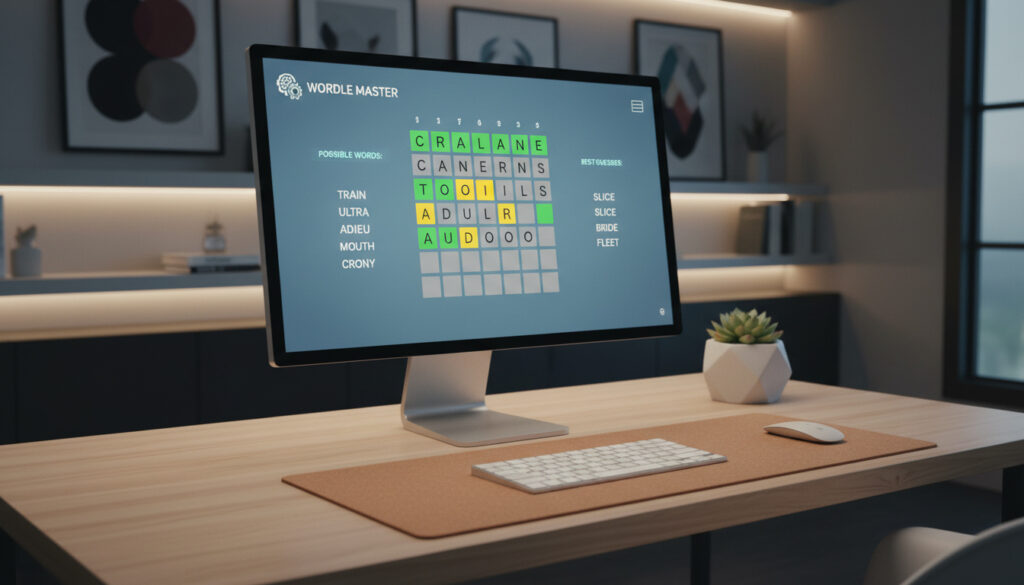
Wordle solvers have emerged as essential companions for players tackling the daily five-letter puzzle. These free online tools analyze color-coded feedback from the game—green, yellow, and gray indicators—to filter thousands of possible words down to a handful of viable solutions. By inputting known letters and excluded characters, players can transform a guessing game into a strategic exercise in elimination.
The ecosystem includes browser-based assistants like WordFinder and specialized platforms, all operating without downloads or registration. Whether seeking to salvage a failing streak or simply curious about optimal starting strategies, these calculators offer data-backed guidance while maintaining the six-guess challenge structure of the New York Times game.
This guide examines the most effective solvers available, explains the mechanics of letter-position filtering, and addresses the critical uncertainties regarding whether using assistance violates platform policies.
What Is the Best Wordle Solver for 5-Letter Puzzles?
Multiple free tools dominate the solver landscape, each offering distinct interfaces for filtering five-letter words. Try Hard Guides provides a straightforward input system, while Word Tips extends functionality to Scrabble and Words With Friends. Wordle Solver Pro differentiates itself through algorithmic analysis of starting words, incorporating research from MIT and the New York Times.
| Tool | Primary Features | Notable Capabilities | Cost |
|---|---|---|---|
| WordFinder | Instant filtering, position matching | Supports up to 25 excluded letters; highlights common answers in bold | Free |
| Try Hard Guides | Color-coded input system | Unscrambling support with streamlined interface | Free |
| Wordle Solver Pro | Starting word optimization | Analyzes billions of simulated games; recommends SLATE, CRANE, and SALET | Free |
| Word Tips | Multi-game compatibility | Applicable to Scrabble and Words With Friends | Free |
- Free online Wordle solvers filter thousands of five-letter words instantly based on player input
- Most tools operate through a three-step color-coded system matching the game’s feedback
- Many highlight likely puzzle answers in bold to prioritize statistically probable solutions
- Advanced platforms simulate billions of games to determine optimal starting words
- Tools support up to 25 excluded gray letters for maximum elimination efficiency
- Designed to assist rather than replace final player decisions
- Compatible with other word games including Scrabble and Words With Friends
| Fact | Detail |
|---|---|
| Word Length | 5 letters |
| Maximum Guesses | 6 attempts |
| Solver Input Types | Green (correct position), Yellow (misplaced), Gray (excluded) |
| Exclusion Limit | Up to 25 gray letters |
| NYT Recommended Start | SLATE (strong vowel coverage) |
| MIT Optimal Start | SALET (information theory selection, ~1% better than SLATE) |
| Alternative Starts | CRANE (substitutes R for L in SLATE) |
| Core Strategy | High vowel count, no repeated letters |
| Tool Philosophy | Help rather than solve final answer |
| Simulation Scale | Billions of games analyzed for word frequency |
How Do You Use a Wordle Solver?
How Does Color-Coded Input Function?
Wordle solvers mirror the game’s feedback mechanism through a three-tier input system. Players transfer color information directly from their game board into the solver interface, creating a filter that eliminates impossible words from the solution set. This transfer process requires precise attention to letter placement, as confusing green and yellow indicators produces incorrect results.
Processing Green, Yellow, and Gray Indicators
Green letters represent characters locked in correct positions. When entered into a solver, these act as fixed anchors around which viable words are reconstructed. Yellow letters indicate characters present in the word but currently misplaced; solvers interpret these as required elements that must appear in alternative positions. Gray letters signal confirmed exclusions, with some platforms accepting up to 25 eliminated characters to maximize narrowing.
After establishing these parameters, clicking “Find Words” generates a filtered list. Capitalize My Title’s solver and similar tools then present remaining candidates, often sorting by frequency or probability.
Many solvers highlight common Wordle answers in bold to indicate which guesses are more likely to be actual puzzle answers, helping players prioritize statistically probable words over obscure alternatives.
Are Wordle Solvers Allowed in the Game?
Current NYT Policies on Automated Assistance
No verified information confirms whether the New York Times maintains explicit policies banning Wordle solvers. Official documentation regarding tool usage, penalties for automated assistance, or monitoring systems remains unavailable. Players operate in a regulatory gray zone where technical capability exists without clear prohibition or endorsement.
Using Solvers for Daily Puzzles
Practical usage for today’s puzzle remains technically feasible through browser-based interfaces. However, ethical considerations persist regarding whether external assistance compromises the intellectual challenge intended by the puzzle’s design. The decision ultimately rests on individual player values rather than codified platform rules.
No verified information confirms whether the New York Times maintains explicit policies regarding solver usage, bans specific tools, or monitors for assisted gameplay. Players should recognize this regulatory ambiguity when considering third-party assistance.
What Are the Top Wordle Solver Apps and Alternatives?
Web-Based Primary Tools
The most robust solvers function as browser-based utilities rather than standalone mobile applications. Scrabble-Solver.com and similar platforms prioritize responsive design over native app development, ensuring cross-device functionality without installation requirements. This approach eliminates platform-specific compatibility issues while maintaining feature parity across operating systems.
Cross-Platform Game Compatibility
Several tools extend beyond Wordle to assist with Scrabble, Words With Friends, and other anagram-based games. These multi-game solvers employ unscrambling algorithms that interpret jumbled letters into valid dictionary words, functioning effectively across different rule sets and board configurations.
Unlimited Mode Variants
For players engaging with Wordle Unlimited or archived puzzle collections, solver functionality remains identical. The input systems recognize the same five-letter constraints and color-feedback logic, generating solutions regardless of whether the puzzle originates from the official daily release or practice archives.
Most solvers are designed to help rather than solve, encouraging players to make their own final guess after narrowing possibilities through systematic elimination.
How Has Wordle Solver Technology Developed?
- : Josh Wardle creates Wordle as a private word game, establishing the five-letter, six-guess format documented by The Verge.
- : The New York Times acquires Wordle, integrating it into their games portfolio while maintaining the original mechanics.
- : MIT researchers apply information theory to identify SALET as the statistically optimal starting word, outperforming alternatives by approximately 1%.
- : Free online solver tools including WordFinder and Try Hard Guides launch, offering browser-based filtering for green, yellow, and gray letter inputs.
- : NYT WordleBot AI assistant officially recommends SLATE and CRANE for opening guesses based on vowel coverage and common letter frequency.
- : Advanced solvers implement support for up to 25 excluded letters and expand into multi-game compatibility with Scrabble and Words With Friends.
What Facts Are Established About Solver Usage?
| Established Information | Information That Remains Unclear |
|---|---|
| Tools correctly filter 5-letter words using green/yellow/gray logic | Whether NYT officially bans or penalizes solver usage |
| SLATE, CRANE, and SALET are research-backed optimal starters | Specific success rate statistics comparing assisted vs unassisted play |
| Most solvers are free and require no download | Whether dedicated Android or iOS apps exist for major solver platforms |
| Up to 25 gray letters can be excluded in advanced tools | Impact of solver usage on personal statistics or streak preservation |
| Solvers highlight common answers in bold for prioritization | Whether the New York Times monitors for third-party tool usage |
How Does Solver Logic Function?
The effectiveness of Wordle solvers stems from information theory principles applied to linguistic data. Starting words like SALET maximize entropy by testing letters that eliminate the greatest number of possible solutions. When a player enters gray letters into a solver, the tool performs elimination calculus, removing all words containing those characters from the candidate pool. For more on how technology intersects with popular culture, check out this article about The Hunger Games: The Ballad of Songbirds & Snakes urbanreporter.co.uk.
Vowel-heavy openings followed by consonant variations rapidly partition the solution space. This mathematical approach transforms the game from random guessing into a systematic reduction problem, where each color feedback narrows the field exponentially rather than linearly.
What Do Primary Sources Recommend?
MIT researchers used information theory analysis to determine that SALET performs approximately 1% better than alternatives, making it statistically optimal for narrowing the solution field from the first guess.
— Wordle Solver Pro research documentation
The New York Times’ WordleBot AI assistant recommends SLATE for strong vowel coverage and common letters, with CRANE serving as a high-performing alternative that substitutes R for L.
— Wordle Solver Pro strategy guide
How Can Players Start Using Wordle Solvers Today?
Beginners seeking assistance can access Free Online Wordle Solver Tools immediately through any web browser, entering their green, yellow, and gray letter data to generate narrowed candidate lists. Optimal results emerge when combining these computational aids with research-backed starting words like SLATE or SALET, creating a hybrid approach that leverages both algorithmic filtering and strategic opening selection.
Frequently Asked Questions
What is a Wordle solver?
A Wordle solver is a free online tool that filters possible five-letter solutions based on color-coded feedback from the game, narrowing thousands of words to viable candidates using green, yellow, and gray letter indicators.
How accurate are Wordle solvers?
Accuracy depends on input precision. When correct green, yellow, and gray letters are entered, tools eliminate impossible words with 100% logical certainty, though the final selection among remaining candidates requires player judgment.
Can I use a Wordle solver for today’s puzzle?
Technically yes, as browser-based tools work in real-time. However, whether this aligns with personal ethics or unofficial platform policies remains an individual decision without clear regulatory guidance from game operators.
Does the NYT Wordle ban solvers?
No verified information confirms any official ban. The New York Times has not published explicit policies regarding solver usage or confirmed whether automated assistance triggers account penalties.
Wordle solver for unlimited mode?
Many web-based solvers function identically for Wordle Unlimited variants, accepting the same five-letter inputs and color feedback to generate solutions for non-NYT versions of the game.
What distinguishes MIT’s SALET recommendation from other starting words?
MIT researchers used information theory analysis to determine that SALET performs approximately 1% better than alternatives like SLATE, making it statistically optimal for narrowing the solution field from the first guess.
Can these tools assist with games beyond Wordle?
Yes, several solvers support Scrabble, Words With Friends, and other letter-based games through unscrambling features and letter position matching that function across multiple word game formats.
More related posts
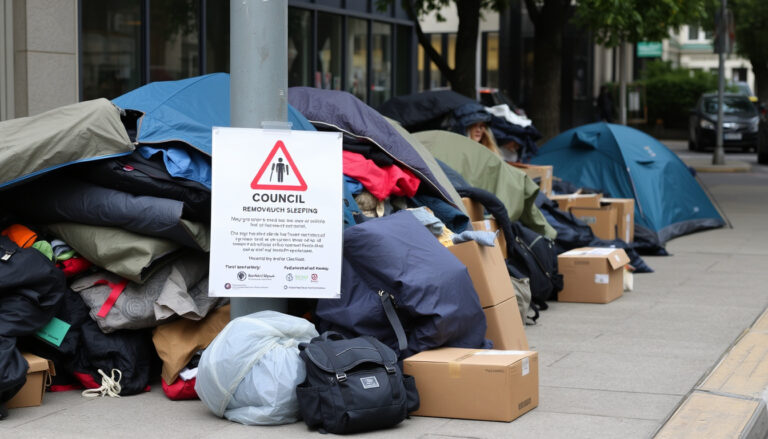 New Plymouth Rough Sleepers Face Belongings Removal Order
 South Africa Women vs England Women: Latest Scores & Results
 Sex and the City: Cast Feuds, Reboot & Samantha Cameo
 Power Switch New Zealand: Compare Plans & Save Money
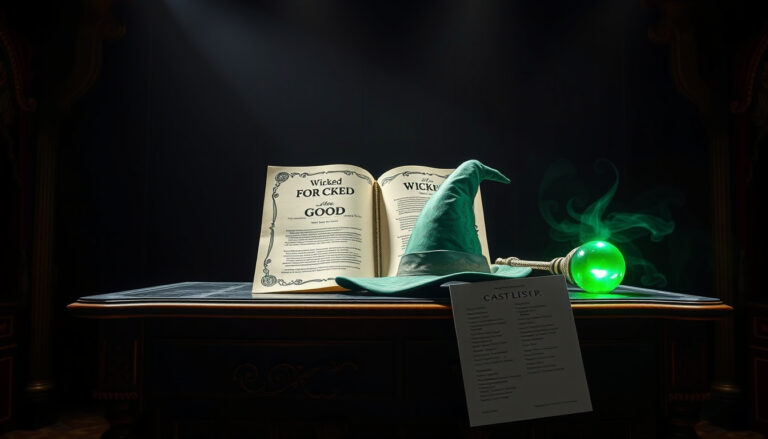 Cast of Wicked: For Good – Full List of Actors and Roles
 Dyspraxia: What Is It? Symptoms, Types & Differences
 Adam Brody Movies and TV Shows: The Complete Guide
 Bay of Plenty Heavy Rain Warning: What You Need to Know
