
Australia Working Holiday Visa – Requirements and How to Apply
Australia’s Working Holiday visa program offers young travelers from eligible countries the chance to live, work, and travel in Australia for up to 12 months at a time. Two visa subclasses handle this program: Subclass 417 for passport holders from countries including the United Kingdom, and Subclass 462 (Work and Holiday visa) for applicants from nations such as India and the United States.
Each visa carries distinct eligibility requirements, application processes, and pathways to extend the stay through regional work. Understanding which subclass applies to your nationality—and what conditions apply—can help determine whether this program fits your travel and career plans.
What are the requirements for the Australia Working Holiday visa?
Meeting the core requirements involves satisfying nationality conditions, age limits, financial thresholds, and health and character checks. These criteria vary slightly between the two subclasses.
Visa types and eligibility overview
Subclass 417 (UK, Europe) and Subclass 462 (India, USA, China)
18-30 years standard; up to 35 for select nationalities
Up to 12 months per visa; maximum 3 years total stay
Full-time and part-time employment; max 6 months per employer
Key facts to know before applying
- Applicants must hold a valid passport from an eligible country at the time of application.
- Age is fixed at the point of application—candidates must apply before turning 31 (or 36 where applicable).
- Proof of minimum AUD 5,000 in available funds is required for both subclasses.
- Subclass 462 applicants must demonstrate functional English and either tertiary qualifications or skilled work experience.
- Both visas allow study for up to 4 months and permit multiple entries during the stay.
- Dependents cannot accompany the visa holder unless they hold their own valid visas.
- Applications are submitted online through the Australian government’s ImmiAccount system.
Comparison of key aspects
| Aspect | Subclass 417 | Subclass 462 |
|---|---|---|
| Age limit | 18-35 for UK, Canada, Ireland; others 18-30 | 18-30 standard; up to 35 for some nationalities |
| Eligible countries | UK, much of Europe, parts of Asia-Pacific | India, USA, China, and specified others |
| English requirement | None | Functional English proof (e.g., IELTS 4.5) |
| Education requirement | None | Tertiary qualification or skilled employment |
| Government support letter | Not required | May apply depending on country |
| Base application fee | AUD 635 | AUD 635 |
The AUD 5,000 minimum represents funds available upon arrival. Applicants should also budget for health examinations (approximately AUD 200-300), police certificates, biometric fees (AUD 20-50 for some nationalities), and visa charges to ensure a complete application.
What is the Working Holiday visa Australia 462?
Subclass 462, formally titled the Work and Holiday visa, serves as Australia’s bilateral agreement program with a broader set of countries than Subclass 417. Unlike the simpler 417 process, the 462 stream introduces additional documentary requirements that reflect the program’s intent of attracting young adults with established skills or educational backgrounds.
Countries eligible for the 462 visa
The 462 program covers nations including the United States, India, China, Argentina, Bangladesh, Chile, Indonesia, Malaysia, Mexico, Spain, Thailand, Turkey, Uruguay, and Vietnam. Eligibility depends entirely on the passport held at the time of application—not citizenship or residence.
What makes 462 different from 417
The core distinction lies in entry requirements. Subclass 462 demands proof of functional English proficiency, typically demonstrated through standardized testing such as IELTS (minimum score of 4.5), PTE Academic, or equivalent accepted results. Applicants must also provide evidence of either a completed tertiary qualification or at least two years of skilled work experience.
Some nationalities applying under the 462 stream may require a letter of support from their government as part of the application. This additional layer of documentation contributes to the generally longer processing times reported by applicants from India and the United States.
Pathway to second and third visas
Holders of a first Subclass 462 visa can apply for a second visa by completing 88 days of specified work in regional Australia. Acceptable sectors include agriculture, forestry, fishing, mining, construction, tourism, and aged or disability care. The official Home Affairs guidance confirms that applicants must hold or have held a first Subclass 462 visa to qualify for this renewal pathway.
How to apply for the Australia Working Holiday visa?
The application process follows a structured sequence whether applying for Subclass 417 or Subclass 462. Both streams use the same online platform, though the documentation requirements differ.
Step-by-step application process
First, create an ImmiAccount through the Australian government’s official portal. This account serves as the central hub for submitting documents, tracking application status, and receiving correspondence throughout the process.
Second, complete the online application form with accurate personal details matching the passport exactly. Errors in names, birth dates, or passport numbers can delay processing significantly.
Third, prepare and upload all required supporting documents. For Subclass 417, this includes proof of funds, passport copies, and completed health and character declarations. Subclass 462 applicants must additionally submit English language test results, qualification certificates, employment references, and any required support letters.
Fourth, pay the application fee of AUD 635 using a valid credit or debit card. Additional fees for health examinations, police certificates, and biometrics apply separately.
Fifth, wait for the Department of Home Affairs to assess the application. Incomplete submissions face the longest delays. Processing times average 4-6 weeks for 90% of complete applications, though this extends during peak periods between October and March.
Processing times fluctuate based on nationality, application completeness, and seasonal demand. Applicants from India and the USA applying under Subclass 462 frequently report longer wait times due to additional document verification. The Wikipedia overview of the program notes that processing speed depends heavily on submitting everything correctly the first time.
Health and character requirements
All applicants must complete a health examination conducted by an approved panel physician. The examination scope depends on intended stay duration and planned activities. Character requirements involve providing police certificates from any country where the applicant has lived for 12 months or more during the past 10 years.
Those with certain medical conditions or criminal histories may face additional scrutiny or outright refusals. Applicants uncertain about their status should consult the official Home Affairs Subclass 417 information before submitting applications.
Australia Working Holiday visa for UK citizens
British passport holders benefit from the streamlined Subclass 417 pathway, which eliminates several requirements faced by applicants from other countries. UK citizens between 18 and 35 years old at application time can access this route.
UK-specific advantages under subclass 417
No English language testing or educational documentation is required for UK applicants. The only substantive requirements involve holding a valid British passport, demonstrating sufficient funds, and passing health and character checks. This simplicity makes the UK application process among the fastest to complete.
Financial proof for UK applicants
UK citizens must still demonstrate access to AUD 5,000, typically through bank statements, payslips, or sponsorship declarations. These funds should be genuinely available rather than borrowed, as immigration officers may question the source of demonstrated finances.
British nationals aged 18-35 can apply for the Subclass 417 visa. Age is locked at the point of application—applicants must submit before their 36th birthday (or 31st where applicable). No English testing or university qualifications are needed, but proof of AUD 5,000 in available funds remains mandatory.
Visa timeline: From first application to potential third stay
- First visa application: Submit online via ImmiAccount with all required documents. Processing takes 4-6 weeks for complete applications.
- Visa grant: Receive approval notification with grant number. The 12-month validity period begins from the date of grant or first entry.
- First 12-month stay: Travel, work (max 6 months per employer), and study (max 4 months) freely throughout Australia.
- Regional work period: Complete 88 days of specified work in regional Australia if planning to apply for a second visa.
- Second visa application: Submit while still in Australia or from abroad. Requires evidence of regional work completion. Costs include base fee plus health and police check fees.
- Second visa grant: Valid for another 12 months with identical work and study permissions.
- Third visa pathway: Complete an additional 6 months of specified work in regional Australia during the second or third year to qualify for a third and final visa.
The official Australia tourism guidance confirms that applicants cannot extend indefinitely—three years represents the maximum total stay under the Working Holiday program.
What is confirmed versus what remains unclear about the visa
Several aspects of the Working Holiday visa program are clearly documented through official Australian government sources. Other details carry inherent uncertainty that applicants should factor into their planning.
| Established information | Uncertain or variable details |
|---|---|
| Age limits: 18-30 standard; 18-35 for select nationalities including UK citizens | Processing times vary significantly by individual circumstances |
| Base application fee: AUD 635 per application | Fees update periodically and may change without notice |
| 88 days of regional specified work required for second visa renewal | Specific documentary requirements for support letters vary by country |
| Maximum 3 years total stay across all Working Holiday visas | Precise employer categories accepted as “regional” work may have interpretation variations |
| Subclass 417 (UK, Europe) vs Subclass 462 (India, USA, China) nationality assignments | Whether future bilateral agreements will expand eligible nationalities |
| English language and qualification requirements apply only to Subclass 462 | How strictly immigration officers enforce the 6-month-per-employer work limit |
Why the Working Holiday program exists and how it functions
Australia’s Working Holiday visa program originated from reciprocal agreements designed to encourage cultural exchange between young adults from participating nations. The arrangement benefits Australia by filling seasonal labor gaps in regional industries while providing international travelers with affordable ways to fund extended overseas experiences.
The program structure creates mutual advantages. Host regions gain temporary workers willing to take on roles that permanent residents often overlook, particularly in agriculture, hospitality, and tourism sectors. Travelers gain legal authorization to work and study while exploring a large and diverse country at their own pace.
Subclass 417 serves nations with existing strong bilateral ties, particularly in Europe and among Commonwealth countries. Subclass 462 was introduced in 2005 to engage with emerging economies including China, expanding the pool of eligible participants to include growing middle classes from nations with developing tourism and youth exchange programs.
What sources provide the most reliable information
“The Work and Holiday (subclass 462) visa is for people aged 18 to 30 who want to holiday in Australia and who also want to do short-term work or study to help fund their trip.”
— Australian Government Department of Home Affairs
“The visa allows you to stay in Australia for up to 12 months, work (for up to 6 months with each employer), and study (for up to 4 months).”
— Tourism Australia official guidance
The Australian Government’s Department of Home Affairs maintains the authoritative source for visa eligibility, application procedures, and policy updates. The Subclass 462 information page contains the most current details for Work and Holiday applicants, while the Subclass 417 page covers the standard Working Holiday stream.
Next steps for prospective applicants
Those considering the Working Holiday visa should begin by confirming their nationality’s eligibility and understanding which subclass applies to their passport. Reviewing the official requirements thoroughly before beginning the application helps prevent costly mistakes or rejected submissions.
Gathering financial proof, health examination results, and police certificates in advance streamlines the process considerably. Subclass 462 applicants should schedule English language testing well ahead of their planned application date, as test results are typically valid for two years but the booking slots may not be immediately available.
Before making final plans, potential applicants may want to use the Public Holiday Checker to understand Australian national and state holidays that might affect arrival timing or initial job searching. Those interested in other Australian immigration pathways could explore the Guide to Buying Businesses in Australia & NZ as an alternative long-term residence option.
Frequently asked questions
How long does the Australia Working Holiday visa take to process?
Complete applications typically process within 4-6 weeks. Incomplete submissions or applications from certain nationalities may take 3-6 months, particularly during peak season between October and March.
Can I extend the Working Holiday visa beyond 12 months?
Yes. Completing 88 days of specified work in regional Australia allows application for a second 12-month visa. A third visa requires an additional six months of regional work. The maximum total stay is three years.
What types of work count toward the 88-day regional requirement?
Acceptable sectors include agriculture, forestry, fishing, mining, construction, tourism, and aged or disability care. Work must physically occur in designated regional areas of Australia.
Do I need a university degree to apply for the Working Holiday visa?
Only Subclass 462 applicants need qualifications or skilled work experience. Subclass 417 applicants (including UK citizens) face no educational requirements.
Can I bring my partner or children on the Working Holiday visa?
The visa does not include dependent family members. Partners and children must apply for their own visas if they wish to accompany you to Australia.
What happens if I work for more than 6 months with the same employer?
Violating the 6-month-per-employer condition represents a breach of visa conditions and could result in visa cancellation. Some exceptions apply for approved circumstances, but these require written permission from Home Affairs beforehand.
Is the Working Holiday visa renewable after the third visa?
No. The program permits a maximum of three visas total, representing a maximum three-year stay. Those wishing to remain longer must apply for a different visa category through the standard skilled or family migration pathways.
More related posts
 Movie Theater Showtimes in Auckland: Times, Tickets & Cinemas
 What Is an MD5 Checksum? How It Works & Why Avoid It
 Easy Cuban Recipes at Home: 15 Authentic Dinner Dishes
 Sex and the City: Cast Feuds, Reboot & Samantha Cameo
 Bio Gold NZ Reviews: Does Pine Pollen Boost Testosterone
 Brisbane Roar FC Standings 2025: 11th in A-League Men
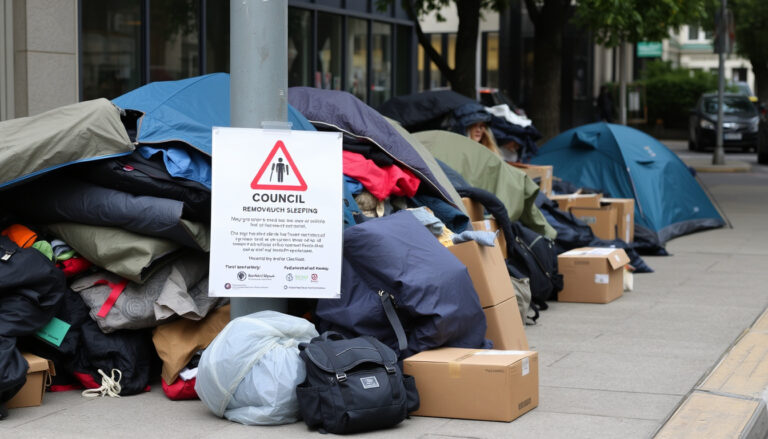 New Plymouth Rough Sleepers Face Belongings Removal Order
 Best Places to Fly Drones in Ireland: Legal Spots
