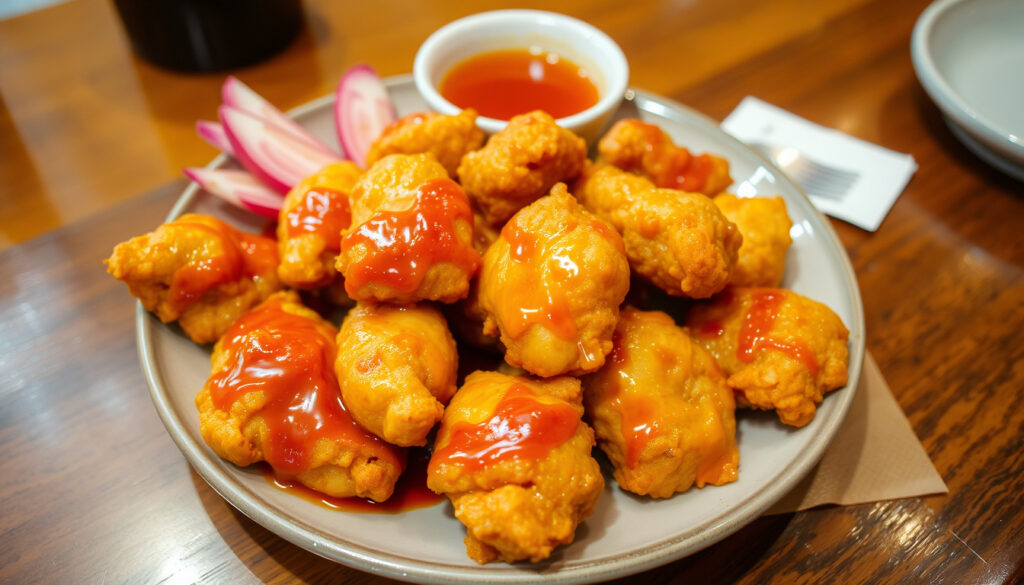
Korean Fried Chicken Recipe: Get the Crispy Secret | Step-by-Step
There’s a reason Korean fried chicken has become a global obsession. That shatteringly crisp shell comes from a deceptively simple technique: double frying. Korean cookbook author Maangchi (Korean cookbook author) explains that the first fry at a moderate temperature cooks the chicken through, and the second fry at higher heat creates that ultra-crispy crust. This guide walks you through the exact steps and sauce secrets so you can replicate restaurant-quality chicken at home.
Crispy secret: Double frying ·
Key sauce ingredient: Gochujang ·
Typical preparation time: 1–2 hours ·
Popular accompaniment: Pickled radish
Quick snapshot
- Exact oil temperature varies by recipe
- Origin of double-fry technique is debated
- Best starch type is subjective
- First fry: 7–8 minutes at moderate heat
- Rest 5–10 minutes between fries
- Second fry: 12–15 minutes until golden
- Try air fryer adaptations
- Experiment with gluten-free starch blends
- Pair with pickled radish and cold beer
Five key facts, one takeaway: the starch coating and double fry are non-negotiable, while the sauce allows room for personal taste.
Here’s how the foundational elements break down.
| Attribute | Value |
|---|---|
| Origin | South Korea |
| Key technique | Double frying |
| Starch type | Potato or cornstarch |
| Sauce base | Gochujang (Korean chili paste) |
| Global popularity | High, especially in the US and Asia |
What is the secret to Korean fried chicken?
What makes Korean fried chicken so good?
The secret lives in the double fry. Drive Me Hungry (Korean recipe blog) explains that the first fry renders fat from the skin while the second fry produces a crisp, crunchy crust that stays crunchy even after saucing. The coating is a thin batter made from cornstarch or potato starch — not a thick flour breading. Hungry Huy (Vietnamese food blog) notes that the sweet, gochujang-spiked glaze is what sets it apart from American fried chicken.
Home cooks who skip the second fry end up with soggy skin. The extra step delivers that addictive crunch.
The implication: the double-fry isn’t optional—it’s the defining technique that separates Korean fried chicken from all others.
How to make simple Korean fried chicken?
What ingredients do I need?
You’ll need chicken wings or drumettes, cornstarch or potato starch, salt, pepper, and oil for frying. For the sauce, gather gochujang, honey or rice syrup, soy sauce, garlic, ginger, and rice vinegar. Kitchen Sanctuary (UK food blog) uses gochujang paste, honey, brown sugar, soy sauce, garlic, and ginger. Rebecca Lang Cooks (Southern cookbook author) adds sesame oil and rice vinegar for depth.
Step-by-step instructions
- Marinate chicken in rice wine or milk for 30 minutes.
- Dredge in starch, salt, and pepper mixture.
- First fry at 165°C (330°F) for 7–8 minutes (Aaron and Claire YouTube).
- Rest chicken on wire rack for 5–10 minutes.
- Second fry at 180°C (355°F) for 12–15 minutes until deep golden.
- Toss in sauce: simmer gochujang, honey, soy sauce, garlic, and ginger until sticky.
That resting phase lets moisture escape, so the second fry hits a dry surface — the prerequisite for crunch.
The pattern: each step in the process is designed to remove moisture, which is the enemy of crispiness.
What is the coating on Korean fried chicken?
What is the batter for Korean fried chicken?
The coating is a thin starch slurry, not a wet flour batter. Maangchi (Korean cookbook author) seasons the chicken, coats it in cornstarch, then fries. The starch forms a thin, lace-like crust that stays delicate. Potato starch creates a more brittle crust, while cornstarch yields a slightly lighter crunch. Rebecca Lang Cooks confirms that no flour-based breading is used — the starch is the secret.
Using too thick a batter clogs the crust. Keep it light — just enough to coat, not encase.
The implication: the choice between potato and cornstarch comes down to which texture you prefer—brittle versus light.
What makes Korean fried chicken so crispy?
How do Koreans achieve extra crunch?
Double frying is the core technique, but the starch choice also matters. Joshua Weissman (chef and YouTuber) emphasizes that the second fry must be hot enough to create a dry crust. Woo Can Cook (cooking channel) recommends using potato starch for a more crackly exterior. Allowing the chicken to rest between fries lets the surface dry out, so the second fry doesn’t steam the coating.
Double frying takes more time but delivers a crust that holds up under sauce. For a weeknight shortcut, single-fry at a steady 175°C, but expect less crunch.
What this means: the resting period between fries is as critical as the frying itself—skipping it means losing the signature crunch.
How to make Korean fried chicken sauce?
What is the best gochujang sauce recipe?
The classic yangnyeom sauce starts with gochujang. Maangchi’s version includes ketchup, rice syrup, gochujang, soy sauce, vinegar, garlic, and sugar. Crab Cakes and Kimchi (Korean fusion blog) builds with garlic, ketchup, sriracha, gochujang, mirin, and brown sugar. Combine ingredients in a saucepan, simmer until thick, then toss with fried chicken. Adjust spiciness by adding or reducing gochujang.
How to adjust spiciness
- Mild: use 1 tablespoon gochujang, increase honey or ketchup.
- Medium: 2 tablespoons gochujang, a pinch of red pepper flakes.
- Hot: add gochujang, sriracha, or fresh chili.
Woo Can Cook includes honey and sweet chili sauce to balance heat. Weissman adds mirin for acidity. Rice vinegar appears across multiple recipes as the acid that cuts richness.
Every recipe balances gochujang’s funk with a sweetener (honey, syrup, or sugar) and an acid (rice vinegar or ketchup). Tweak the ratio to match your palate.
The catch: without the acid component, the sauce becomes cloying—the vinegar is what makes the glaze work.
Confirmed facts vs. what’s unclear
Confirmed facts
- Double frying produces crispy texture (Maangchi)
- Gochujang is primary sauce ingredient (Maangchi)
- Coating uses thin starch batter (Maangchi)
- Garlic is near-universal in gochujang sauces (Kitchen Sanctuary)
What’s unclear
- Exact oil temperature varies (some start at 165°C, others at 175°C)
- Origin of double-fry technique is debated
- Best starch type (corn vs. potato) is subjective
- Ginger appears in some but not all sauces (Kitchen Sanctuary)
Quotes from experts
“Double frying renders fat from the chicken skin and produces a crispier, crunchier exterior.”
“The first fry cooks through; the second fry creates that signature crackling crust.”
— Maangchi (Korean cookbook author)
For a deeper look at cooking techniques, check out What Is Heavy Cream? Definition, Uses & Substitutes and Kulich Bread Near Me: Where to Buy & How to Enjoy.
For an even deeper dive into the science of that shatteringly crisp crust, check out this detailed guide on the Korean fried chicken double-fry technique.
Frequently asked questions
Can I use an air fryer for Korean fried chicken?
Yes. Coat the chicken in starch, spray with oil, and air fry at 200°C (390°F) for 12–15 minutes per side. You’ll miss the double-fry effect, but it still produces a decent crunch.
What is the best oil for frying?
Use a neutral oil with a high smoke point like peanut, canola, or vegetable oil. Avoid olive oil — it burns at frying temperatures.
Can I make it ahead of time?
You can pre-fry the chicken once, refrigerate, and do the second fry just before serving. The sauce can be made 2–3 days ahead and reheated.
How to store leftovers?
Store sauced chicken in an airtight container in the fridge for up to 3 days. Reheat in an oven or air fryer at 180°C (350°F) for 5–7 minutes to revive crispness.
What side dishes go with Korean fried chicken?
Pickled radish (danmuji), fresh lettuce wraps, kimchi, and cold beer or soju are classic pairings. Steamed rice also helps balance the spicy sauce.
Is Korean fried chicken gluten-free?
It can be if you use gluten-free gochujang (some brands contain wheat) and cornstarch instead of flour. Always check labels.
How long does the sauce keep in the fridge?
Gochujang sauce keeps for up to one week in a sealed container. Reheat gently before tossing with chicken.
More related posts
 Best Places to Fly Drones in Ireland: Legal Spots
 Trivia Questions and Answers for Adults, Kids & Work
 Things to Do in Takaka: Top Attractions & Activities
 We Were Liars Cast: Full Character Guide and Mysteries Explained
 Bio Gold NZ Reviews: Does Pine Pollen Boost Testosterone
 New World Three Parks: Hours, Ownership Guide 2025
 Colin and Manu Off the Grid: Watch Guide & Friendship Explained
 Daily Disposable Contact Lenses: Wear Time, Cost and Brands
