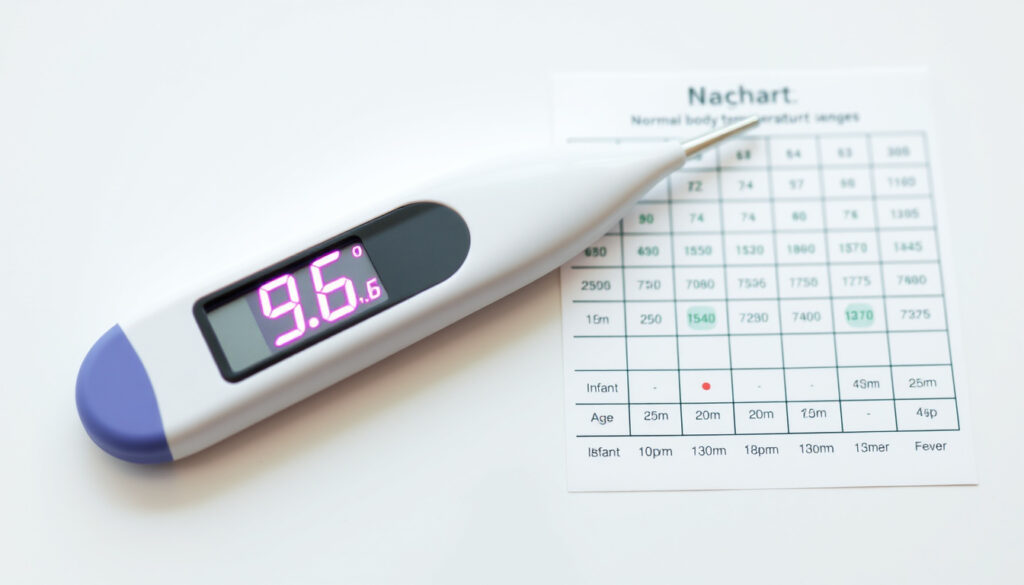
What Is Normal Body Temperature? Range by Age & Fever Guide
You’ve probably grown up hearing that 98.6°F is the magic number for normal body temperature. But if you’ve ever felt perfectly healthy while the thermometer read 97.3°F, or worried over a reading of 99.1°F, you’re not imagining things. That familiar benchmark turns out to be more of an average than a universal rule, and modern research suggests the real picture is more nuanced—and more interesting—than a single number. This guide breaks down what actually counts as normal across different ages, measurement methods, and situations, backed by clinical sources.
Average normal: 98.6°F (37°C) · Adult range: 97°F to 99°F · Fever threshold: 100.4°F (38°C)
Quick snapshot
- 98.6°F (37°C) is a historical average, not a universal normal (Harvard Health)
- Fever starts at 100.4°F (38°C) for adults (Harvard Health)
- Older adults average 0.23°C lower than younger adults (PMC – National Center for Biotechnology Information)
- Precise “normal” for any given individual varies day to day
- Exact temperature thresholds for elderly patients in clinical settings lack universal consensus
- Why average body temperature appears to be declining in modern populations remains debated
- Rectal readings run higher than oral; armpit runs lower (Medical News Today)
- Forehead scanners measure 0.3°C to 0.6°C below oral readings (My Health Alberta)
- Temperature fluctuates throughout the day, lowest before waking (MedlinePlus)
- Track your personal baseline over several healthy days
- Choose the right thermometer method for your situation
- Know when symptoms—regardless of exact number—warrant a doctor visit
The following table summarizes normal temperature ranges across different measurement methods and age groups, based on clinical data from multiple medical sources.
| Measurement | Normal Range (°F) | Normal Range (°C) |
|---|---|---|
| Historical average (oral) | 98.6°F | 37°C |
| Modern adult oral range | 97°F to 99°F | 36.1°C to 37.2°C |
| Children (oral, ages 1+) | 95.9°F to 99.5°F | 35.5°C to 37.5°C |
| Newborns (rectal) | 97°F to 100.3°F | 36.1°C to 37.9°C |
| Adult ear (tympanic) | 95.7°F to 100°F | 35.4°C to 37.8°C |
| Hypothermia threshold | Below 95°F | Below 35°C |
Is a normal body temperature 36 or 37?
The short answer is: it depends. The textbook average of 98.6°F (37°C) has been quoted for over a century—it was calculated by a German physician in the mid-1800s from thousands of patient readings (Riverside Health). But that figure represents an average across many people, not a fixed setpoint for any individual. Modern research involving tens of thousands of participants suggests the true average may sit closer to 36.4°C (97.5°F), making the traditional benchmark slightly elevated compared to what contemporary measurements show.
Average range in Celsius and Fahrenheit
For most healthy adults, normal oral temperature falls between 97°F and 99°F (36.1°C to 37.2°C) over the course of a day (Banner Health). A large study of nearly 35,500 people found that average temperatures vary by age, gender, and ethnicity, with older adults generally running cooler and African American women averaging slightly higher than white men (Medical News Today). The average across all measurement sites in that study came to 97.86°F (36.59°C)—noticeably below the historical standard.
Factors affecting daily variation
Body temperature isn’t static. It follows a circadian rhythm, typically reaching its lowest point about two hours before you wake up and peaking in the late afternoon (MedlinePlus). Physical activity, food intake, menstrual cycles (in women), and even the environment can shift your reading by a degree or more. These variations are normal and don’t indicate illness on their own.
The 98.6°F benchmark persists partly because generations of doctors learned it as gospel. When you see a reading in the 97s, you’re often within perfectly normal range—context (time of day, measurement method, how you feel) matters as much as the number itself.
What is the ideal body temperature by age?
Temperature norms shift across the lifespan. Children tend to run warmer than adults, while people over 60 typically average cooler readings. Understanding these differences matters for interpreting fever accurately—too-low thresholds can cause unnecessary alarm in children, while too-high thresholds might miss genuine concerns in seniors.
Adults
For adults aged 18-65, a normal oral temperature typically ranges from 97°F to 99°F (36.1°C to 37.2°C) throughout the day (Power – Clinical Trials). A review of adult temperature data places the average orally-taken reading between 97.2°F and 98.6°F (36.24°C to 37°C) (Medical News Today). Women have slightly higher average temperatures than men, partly due to hormonal differences, and younger people tend to run warmer than older adults (Banner Health).
Children
Children generally have higher normal temperatures than adults. For kids ages 1 and up using an oral thermometer, the normal range sits between 95.9°F and 99.5°F (35.5°C to 37.5°C) (WebMD). Toddlers and young children can tolerate slightly elevated temperatures without concern; what would signal a low-grade fever in an adult may be perfectly normal for a healthy child. Rectal measurements run higher—97.9°F to 100.4°F (36.6°C to 38°C)—which is why method matters when comparing to reference ranges (WebMD).
Elderly (70+ years)
Adults over 60 tend to have lower baseline temperatures than younger adults. Research published in PMC found that people aged 60 and older averaged 36.5°C (±0.48°C), compared to 36.69°C (±0.34°C) for those under 60—a difference of 0.23°C that compounds when fever is suspected (PMC – National Center for Biotechnology Information). This lower baseline means fevers in older adults can reach higher-seeming temperatures before meeting clinical thresholds, and conversely, what looks like a normal reading might actually indicate infection in someone whose baseline is normally lower.
Caregivers who rely on the textbook 98.6°F may miss fever in older adults whose healthy baseline sits at 97°F. A reading of 99°F could signal a significant elevation in someone whose personal normal is lower than average.
What is the temperature of a fever?
Fever isn’t a single threshold—it’s a spectrum. Medical guidelines distinguish between low-grade, moderate, and high-grade fevers, each carrying different implications for treatment and monitoring. The numbers can also shift slightly depending on how and where you measure.
Fever thresholds
For adults, a fever is clinically defined as 100.4°F (38°C) or higher (Harvard Health). Before that, readings from 99.1°F to 100.4°F (37.3°C to 38°C) are considered low-grade—elevated but often not concerning on their own. Moderate-grade fever runs from 100.6°F to 102.2°F (38.1°C to 39°C), while high-grade fever spans 102.4°F to 105.8°F (39.1°C to 41°C) (Harvard Health). Interestingly, moderate fevers up to 102°F can actually help the body fight infection, so not every elevation needs suppressing (My Health Alberta).
Is 37.5°C or 37.7°C high?
A reading of 37.5°C (99.5°F) falls into the upper end of normal variation for most adults—it’s not technically a fever by clinical standards, but it’s elevated. The fever threshold of 100.4°F marks where most healthcare providers consider intervention or monitoring appropriate for healthy adults. If you record 37.5°C consistently over several days alongside symptoms like fatigue, sore throat, or body aches, it may warrant a doctor’s call to rule out underlying infection.
Is 38°C normal?
At 38°C (100.4°F), you’ve crossed into fever territory. This is the clinical threshold where most guidelines recommend paying closer attention, especially if symptoms worsen or persist beyond 48-72 hours in otherwise healthy individuals. Most healthy adults can tolerate short periods at 39.4°C (103°F) or even 40°C (104°F) without lasting harm, but prolonged high fevers or accompanying symptoms (confusion, chest pain, severe headache) demand prompt medical evaluation (My Health Alberta).
At what temperature should you start to worry?
The answer hinges on age, underlying health conditions, symptoms, and duration—not the number alone. For most healthy adults, fevers below 102°F generally don’t require aggressive intervention, while readings above 103°F warrant closer monitoring. But specific populations—infants, pregnant individuals, and people with chronic illnesses—need lower thresholds.
High fever concerns
A fever above 103°F (39.4°C) in adults typically signals a more significant infection and may cause discomfort warranting treatment. High fevers above 105.8°F (41°C) are concerning because the body’s cooling mechanisms can fail at extreme temperatures, potentially causing organ stress (Harvard Health). These extreme elevations are uncommon with common viral infections and should prompt urgent care or emergency evaluation.
When to seek care
Call your doctor if an adult has a fever above 103°F that doesn’t respond to over-the-counter medication, or if fever persists beyond three days. Seek emergency care for fever accompanied by severe headache, neck stiffness, confusion, chest pain, persistent vomiting, or difficulty breathing. For infants under three months, any rectal temperature of 100.4°F (38°C) or higher requires immediate pediatric evaluation (Ubie Health). Pregnant individuals should contact their healthcare provider about any fever above 100.4°F, as sustained elevations can affect fetal development.
Fever severity and symptom severity don’t always track together. A mild viral infection might produce 102°F with minimal symptoms, while a serious bacterial infection could cause only a low-grade fever. Temperature is one data point among many—your overall condition matters more than any single reading.
Is a body temperature of 35.5°C an emergency?
Low body temperature—below 95°F (35°C)—falls into the hypothermia range, but not every below-average reading signals danger. The clinical context matters: exposure to cold, metabolic conditions, medication effects, and thyroid dysfunction can all push readings lower. Severity ranges from mild (shivering, confusion) to severe (loss of consciousness, organ failure).
Low body temperature signs
Normal body temperature for healthy adults rarely dips below 97°F. A reading of 35.5°C (95.9°F) falls outside typical variation and may indicate mild hypothermia or an underlying metabolic issue. Symptoms accompanying low temperature—such as intense shivering, slurred speech, clumsiness, or confusion—suggest the body is struggling to maintain warmth and warrants evaluation.
Illnesses causing low temperature
Hypothyroidism (underactive thyroid), sepsis (body-wide infection), hypoglycemia (low blood sugar), and Addison’s disease can all suppress body temperature. Certain medications—particularly sedatives, anesthetics, and some psychiatric drugs—impair the body’s ability to regulate heat. Older adults are especially vulnerable because metabolic rate declines with age and thermoregulation becomes less efficient (Power – Clinical Trials). Diabetic patients experiencing low blood sugar may also show hypothermia as an early warning sign. For more information on normal body temperature, check out this Princess Michael of Kent health.
What does 35.4°C mean?
A reading of 35.4°C (95.7°F) sits just above the clinical hypothermia threshold but below the normal ear temperature range for adults (95.7°F to 100°F). If this reading comes from an ear thermometer, it’s within normal variation. If it’s an oral or rectal reading, it warrants monitoring—check again in 30 minutes, and if it remains low or drops further, consider contacting a healthcare provider, especially if you feel unusually cold, sluggish, or confused.
Low body temperature paired with altered mental status, slowed breathing, or a weak pulse in an older adult is a medical emergency. Hypothermia can progress rapidly in vulnerable populations even at relatively mild temperature drops, so calling emergency services without delay could prevent serious complications.
Confirmed facts vs. common misconceptions
A lot of what people believe about body temperature doesn’t hold up to scrutiny. Separating verified facts from popular assumptions helps you make better decisions when you’re monitoring your health or a family member’s.
Confirmed
- 98.6°F is an historical average, not a universal normal
- Fever for adults starts at 100.4°F (38°C)
- Oral readings differ from rectal, ear, and temporal readings
- Older adults average 0.23°C cooler than younger adults
- Temperature fluctuates by up to 1°F throughout the day
- Infants under 3 months need urgent evaluation for any fever
Unclear or context-dependent
- Precise “normal” for any individual varies day to day
- Exact elderly thresholds lack universal clinical consensus
- Why modern averages appear lower than historical 98.6°F
- How much ethnic variation affects temperature readings
- Whether lower average temperatures reflect better health or measurement bias
The pattern: most people treat 98.6°F as gospel, but your personal baseline—measured when you’re healthy and relaxed—gives you and your doctor far more actionable information than a century-old population average.
Expert perspectives
Average normal body temperature is generally accepted as 98.6°F (37°C), but this represents an average rather than a fixed normal value for any individual.
— MedlinePlus (U.S. National Library of Medicine)
A normal temperature for adults is in the range of 97°F to 99°F. Temperature varies throughout the day and is normally lowest in the early morning.
— WebMD (Medical Reference Publisher)
Normal body temperature is different for everyone. It usually falls between 36 and 36.8 degrees Celsius.
— HSE.ie (Health Service Executive, Ireland)
Related reading: how long Panadol takes to kick in · apple cider vinegar health benefits
Modern research revises the average healthy adult baseline to about 97.9°F, with ranges for adults and kids breaking down variations across age groups and daily cycles.
Frequently asked questions
What is normal body temperature for women?
Women typically run slightly higher than men—about 0.4°F on average—due to higher body surface area to mass ratio, hormonal fluctuations during menstrual cycles, and higher baseline metabolism. During ovulation, female body temperature can rise 0.5°F to 1°F above baseline.
What is the normal body temperature in Fahrenheit?
The commonly cited normal is 98.6°F, but research indicates the modern average for healthy adults sits closer to 97.86°F across all measurement methods, with an oral range of 97.2°F to 98.6°F.
What is normal body temperature for adults?
Most adults have an oral temperature between 97°F and 99°F (36.1°C to 37.2°C). Individual baselines vary, and readings shift throughout the day by roughly 1°F.
Is 38°C normal body temperature?
No—38°C (100.4°F) marks the clinical fever threshold for adults. This is when most healthcare providers begin monitoring more closely and consider intervention, especially if symptoms accompany the elevation.
What is normal body temperature for a 70-year-old?
Adults over 60 typically average 0.23°C lower than younger adults, meaning a healthy 70-year-old might run around 36.5°C (97.7°F) as a baseline. This lower baseline means fevers may be missed if providers use younger adult thresholds.
What illnesses cause low body temperature?
Hypothyroidism, sepsis, hypoglycemia, Addison’s disease, and certain infections can all suppress body temperature. In older adults, even mild illness can present with low rather than elevated temperature due to diminished immune response.
What does a body temperature of 35.4°C mean?
If measured orally, this is below the normal range and could indicate mild hypothermia or metabolic issues—monitor and retest. If measured via ear thermometer, it falls within the normal tympanic range (95.7°F to 100°F), though on the lower end.
For most people, understanding normal body temperature means letting go of the 98.6°F myth. Your personal baseline—measured over several healthy days using the same method and roughly the same time—gives you and your doctor far more actionable information than a century-old average. When illness strikes, you’ll know whether you’re running genuinely high, genuinely low, or simply above your own normal.
More related posts
 James Hardie Linea Weatherboard: 16mm Specs, Price, Pros & Cons
 Is Lipton Peach Iced Tea Discontinued? Prank Truth
 Brisbane Roar FC Standings 2025: 11th in A-League Men
 Kmart Air Fryer NZ: Best Models, Reviews & Buying Guide
 Labour Day 2025 NZ: History, Pay Rules & What’s Open
 Grow a Garden Discord Server – Step-by-Step Growth Guide
 Dyspraxia: What Is It? Symptoms, Types & Differences
 Magnetic Chess Game NZ: Best Travel Sets & Airport Rules
