Why Does Trump Want Greenland? Arctic Strategy Explained
When Donald Trump publicly mused about buying Greenland in 2019, most observers wrote it off as a passing remark. Years later, the idea has returned—and this time, it’s backed by tariff threats and explicit demands on NATO. The debate cuts deeper than a real estate pitch: it exposes a genuine clash over Arctic control, and who gets to decide what happens there.
Current Owner: Denmark (autonomous territory) · US Military Base: Pituffik Space Base · World’s Largest Island: 836,000 sq mi · Population: 56,000 · Trump Proposal Year: 2019
Quick snapshot
- Trump proposed purchase in 2019 (USC Dornsife)
- Denmark rejected offer as absurd (CBS News)
- US operates Pituffik Space Base since WWII (CBS News)
- Current Greenland independence sentiment among residents
- Whether the US will pursue further coercive measures
- Trump tweets interest in buying — August 2019 (USC Dornsife)
- Truth Social posts calling US control a necessity — late December 2024 (USC Dornsife)
- Escalation continues into 2025–2026 (USC Dornsife)
- Tariffs of 10% on Denmark and others start February 1, 2026 (Wikipedia: Greenland crisis)
- Rising to 25% on June 1 unless a deal is reached (Wikipedia: Greenland crisis)
- NATO and Denmark continue rejecting sovereignty concessions (Wikipedia: Greenland crisis)
The table below summarizes the key facts surrounding the Greenland ownership dispute.
| Label | Value |
|---|---|
| Owner | Denmark |
| Status | Semi-autonomous territory |
| US Presence | Pituffik Space Base since 1940s |
| Trump Tweet Date | August 2019 |
| Proposal Status | Rejected |
Why did Donald Trump want to buy Greenland?
Trump first raised the idea publicly in August 2019, posting on Twitter that buying Greenland “would be a great deal.” The notion was immediately dismissed by Danish officials, who called the offer absurd. But the idea did not disappear—it resurfaced with renewed force late in 2024 on Truth Social, where Trump called U.S. control of Greenland “an absolute necessity” for national security.
The stated rationale centers on perceived threats from Russia and China. Trump claimed on January 4, 2026 that Greenland is “covered with Russian and Chinese ships” and called the island “so strategic right now.” The logic, as he has framed it: melting sea ice is opening new Arctic shipping lanes, and whoever controls Greenland gains a dominant position over those routes. According to the USC Dornsife analysis, Trump’s threats also aim to block Chinese economic deals in Greenland that could compromise U.S. interests.
On January 9, 2026, Trump warned he would pursue the matter “the hard way” if not resolved “the easy way,” with the White House reportedly considering military options. The administration appointed a special envoy to Greenland, signaling intent beyond mere rhetoric.
Some analysts interpret the pressure campaign as the “Donroe Doctrine”—a strategy for asserting dominance in the near-abroad, using economic leverage to force concessions from a NATO ally. Denmark has countered with offers of expanded military presence without sovereignty transfer.
Historical context of the proposal
Trump is not the first U.S. leader to eye Greenland. The island briefly came under U.S. protection during World War II, when American forces moved to prevent a potential German occupation of the strategic North Atlantic outpost. After the war, the 1951 U.S.-Denmark defense agreement formalized the American military footprint, allowing U.S. installations to remain.
The current push marks the first time since those post-war years that a U.S. administration has explicitly sought full sovereignty. Congress members including Mark Warner have publicly questioned whether the stated Russia-and-China threat actually justifies such aggressive steps, according to CBS News coverage.
Recent reiterations
The second Trump administration began pushing for Greenland annexation since 2025, escalating significantly in early 2026. After meeting with NATO Secretary General Mark Rutte, Trump announced a “long-term deal” was in the works, though NATO officials have denied any agreement that would compromise Greenland’s sovereignty. Mid-January 2026, Trump posted on Truth Social demanding that NATO “tell Denmark to get them out of here, NOW!”
Why is Greenland so important?
Greenland is the world’s largest island, spanning 836,000 square miles of territory positioned between North America, Europe, and the Arctic Ocean. This geography makes it uniquely valuable: it sits directly in the flight paths between the U.S. and Russia, and any vessel sailing between the Atlantic and Pacific must pass through nearby waters.
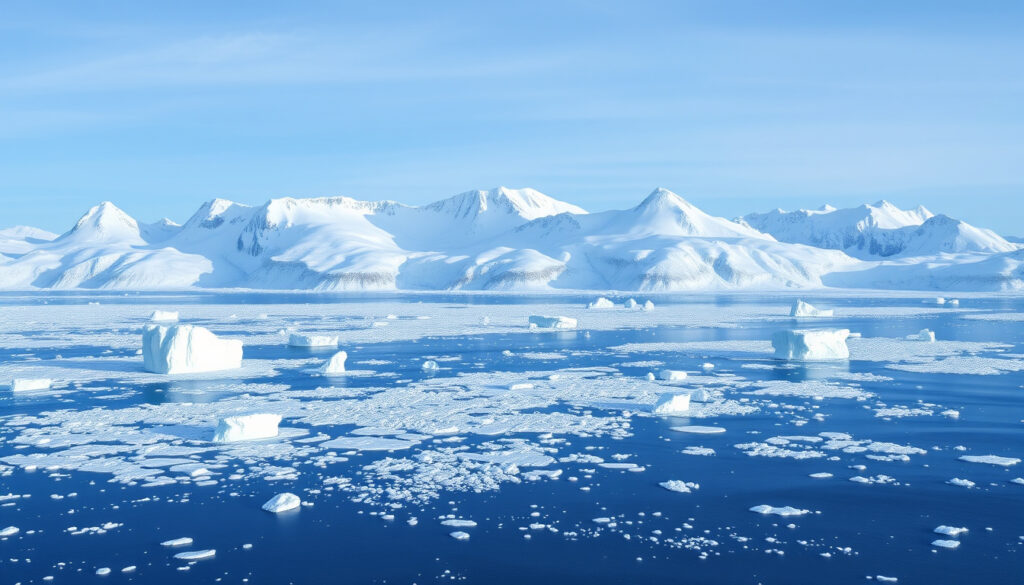
Melting sea ice has accelerated the strategic calculus. New Arctic shipping lanes are opening, creating faster routes between ports in Asia and Europe. Whoever controls Greenland can monitor—or control—traffic through these lanes. The island also sits above potential undersea fiber-optic cable routes and airspace used for missile trajectories, adding layers of military significance.
Beyond location, Greenland holds substantial mineral reserves including rare earth elements critical for technology and defense manufacturing. China has been aggressive about securing rare-earth deals globally, and analysts say Trump’s push partly aims to prevent Beijing from gaining economic leverage over Greenland’s resources.
Greenland’s value has skyrocketed precisely because climate change is transforming the Arctic—yet the warming that makes it so attractive also makes coercive territorial acquisition more publicly difficult to justify.
Geopolitical value
The Arctic is becoming a theater of great-power competition. Russia has been expanding its Northern Fleet and building Arctic bases. China has positioned itself as a “near-Arctic state” and invested in Arctic shipping research. Both nations have increased their operational presence in or near the region.
Danish experts dispute the prevalence of Russian and Chinese naval vessels around Greenland, according to CBS News. They note that Russian military aircraft activity in the region is a genuine concern, and that situational awareness gaps exist—but the claimed ship presence may be overstated for rhetorical effect.
Resources and location
Greenland’s geology holds significant deposits of rare earth minerals, uranium, and zinc. The island’s location provides early-warning capability for ballistic missiles aimed at North America. The proximity to Russia—the shortest route for missiles targeting the U.S. eastern seaboard passes over or near Greenland—makes this particularly relevant for missile defense.
Denmark has invested over $6 billion USD in Greenland’s defense, purchasing F-35 aircraft and P-8 Poseidon patrol planes from the United States, according to The Arctic Institute. This investment demonstrates that Denmark takes Greenland’s security seriously—but the amounts also underscore why sovereignty matters to Copenhagen.
If Arctic ice continues melting, the strategic value of Greenland will only increase—raising the stakes for every party involved and making any resolution more difficult to achieve without significant compromise.
What is the Trump dispute with Greenland?
The core dispute centers on sovereignty. Trump wants outright U.S. control over Greenland; Denmark insists it will not cede territory that its population has inhabited for millennia. Greenland’s own government, while open to stronger defense and economic ties with the United States, has made clear that sovereignty is non-negotiable.
Trump has employed economic pressure to force the issue. On January 9, 2026, he threatened tariffs of 10% on Denmark, Norway, Sweden, France, Germany, the United Kingdom, the Netherlands, and Finland starting February 1, 2026, rising to 25% on June 1 unless Denmark agrees to transfer Greenland. The threat represents an unusual use of trade leverage against a NATO ally.
The tariffs apply to a range of European goods and could significantly damage export-dependent economies. However, they also threaten to fracture NATO unity at a moment when alliance cohesion faces real challenges.
Diplomatic fallout
The diplomatic consequences have been immediate. Danish Prime Minister Mette Frederiksen has maintained that Greenland’s future will be decided by Greenlanders and Danes, not by Washington. Her government has explored options including symbolic defense agreements that expand U.S. presence without transferring sovereignty—essentially offering what Trump claims to want without giving up the legal status quo.
NATO Secretary General Mark Rutte met with Trump and afterward stated that no sovereignty-compromising deal was under discussion. The formal position of the alliance is that Article 5 collective defense commitments apply to all member territories, including Greenland—meaning an attack on Greenland would trigger the entire alliance.
Denmark’s response
Denmark has pursued a careful balancing act. It wants to maintain its Arctic status, keep the U.S. engaged in Greenland’s defense, and avoid appearing to cave to coercion. Officials have proposed enhanced defense cooperation that could give the U.S. more operational latitude on the island without formal annexation.
Danish lawmaker Lars Christian Brask offered a blunt summary of what Washington could actually demand under existing arrangements: “Put up warning systems, missile systems, soldiers, etc. Just by asking, you can.” That comment captured the paradox of Trump’s demand—he may be seeking more than the defense agreement already allows, but the U.S. has not fully utilized its current permissions.
If the U.S. uses force to seize Greenland, it would constitute an attack on a NATO ally—triggering Article 5 and potentially fracturing the alliance at its core.
Why is the US military in Greenland?
The U.S. has maintained a military presence in Greenland since World War II. The 1951 U.S.-Denmark defense agreement explicitly permits American military installations on the island, a provision that grew out of wartime necessity and persisted as Cold War strategy took shape.
Today, the principal U.S. facility is Pituffik Space Base, located in northwestern Greenland. The base hosts early-warning radar systems capable of detecting ballistic missiles launched from Russia or elsewhere en route to North America. It is the northernmost installation under American control—a fact that gives Greenland inherent strategic importance regardless of any purchase proposal.
The base also supports space surveillance and serves as a logistics hub for Arctic operations. Its location provides coverage of polar regions that would be difficult or impossible to replicate elsewhere.
Thule Air Base role
Pituffik is the renamed successor to Thule Air Base, established in 1951 under the defense agreement. The base was designed to monitor Soviet missile launches and serve as a staging area for potential Arctic operations. Over the decades, its role has evolved but retained its core function: early warning and deterrence.
The 1951 agreement gives the U.S. the right to establish and operate military facilities in Greenland. Denmark retained nominal sovereignty but granted the U.S. significant operational autonomy. Trump has argued this arrangement is insufficient—claiming the U.S. needs actual control, not just basing rights.
Cold War origins
The base’s origins reflect a specific Cold War calculation: a Soviet nuclear strike would travel over the Arctic, and early detection from a Greenland radar station could provide critical minutes of warning. That calculus has not disappeared—missile technology has advanced, but the polar route remains a primary trajectory for ICBMs targeting the United States.
The infrastructure built at Pituffik over decades represents a substantial American investment. Rather than start fresh elsewhere, any administration seeking enhanced Arctic capabilities would likely prefer expanding the existing base—which suggests why full ownership of the island feels urgent to some strategists, even if operational needs could theoretically be met through expanded basing rights.
Who owns Greenland and why does Trump want it?
Greenland is a semi-autonomous territory of Denmark with its own elected government and internal lawmaking authority. Copenhagen handles foreign policy and defense, while Nuuk—Greenland’s capital—controls local affairs including education, healthcare, and natural resource management.
Greenland’s population of approximately 56,000 has seen growing support for independence from Denmark in recent years. Greenlandic is the primary language, and cultural identity runs deep. Any change in status—full independence, integration with another nation, or expanded autonomy—requires broad consensus among the people who live there.
Trump’s desire for ownership appears to combine several factors: the strategic location for Arctic monitoring, resource extraction potential, and a broader “America First” posture that views NATO allies as obstacles rather than partners. According to The Arctic Institute’s analysis, his threats to block Chinese deals suggest commercial as well as military motivations.
Denmark’s control
Denmark’s claim to Greenland dates to the early 18th century, when missionaries and traders established colonial relationships. The Danish Crown formally incorporated Greenland in the early 20th century, and post-World War II arrangements affirmed Danish sovereignty while granting increasing autonomy to the Greenlandic people.
The relationship has evolved toward greater self-governance. In 2009, Greenland achieved significant autonomy under the Self-Government Act, gaining control over most domestic affairs while Denmark retained responsibility for foreign and security policy. Independence remains a stated goal for many Greenlandic politicians, though economic viability—Greenland receives substantial subsidies from Denmark—remains a challenge.
Independence movements
Greenland’s independence movement has gained momentum as global attention on the Arctic has increased. Prime Minister Múte Egede has signaled openness to stronger U.S. defense and economic ties but has been unambiguous about sovereignty: Greenland will not become an American territory.
The independence debate intersects with Trump’s pressure in complicated ways. Some analysts suggest an independent Greenland might eventually negotiate defense arrangements with the United States that look similar to what Trump is demanding—but on terms Nuuk would accept rather than conditions imposed by Washington. Others argue that Trump’s coercion pushes Greenlanders toward Denmark rather than toward separation, as external pressure often solidifies existing national bonds.
Timeline signal
The following timeline tracks key developments in the Greenland acquisition discussion.
| Period | Event |
|---|---|
| 1940s | US defends Greenland during World War II |
| 1951 | Thule Air Base established under US-Denmark defense agreement |
| August 2019 | Trump tweets interest in buying Greenland |
| Late December 2024 | Trump calls US control a national security necessity on Truth Social |
| January 4, 2026 | Trump claims Greenland is covered with Russian and Chinese ships |
| January 9, 2026 | Trump threatens “hard way” if “easy way” fails |
| Mid-January 2026 | Trump demands NATO force Denmark to cede Greenland |
| February 1, 2026 | 10% tariffs on Denmark and other nations take effect |
The pattern shows escalating pressure from diplomatic statements to economic threats over a seven-year period.
Confirmed vs Unclear
What is confirmed
- Trump proposed purchase in 2019
- Denmark rejected the offer
- US operates Pituffik Space Base
- 1951 defense agreement allows US installations
- Tariffs announced against Denmark and other allies
- Greenland PM refuses to discuss sovereignty
What remains unclear
- How Greenland residents currently view independence
- Whether the “long-term deal” amounts to anything concrete
- What military options the White House is actually considering
- How far NATO allies will hold the line on tariffs
Voices from the crisis
“We need Greenland from the standpoint of national security, and Denmark is not going to be able to do it.”
Donald Trump, U.S. President (via CBS News coverage)
“If we don’t do it the easy way, we’re going to do it the hard way.”
Donald Trump, U.S. President (via CBS News report)
“Put up warning systems, missile systems, soldiers, etc. Just by asking, you can.”
Lars Christian Brask, Danish lawmaker (via CBS News interview)
“NATO: Tell Denmark to get them out of here, NOW!”
Donald Trump, U.S. President (via Wikipedia documentation)
For Denmark and NATO, the stakes are straightforward: allowing coercion to succeed would undermine the alliance’s foundational principle that borders are inviolable. For Trump, the calculation revolves around what he frames as a closing window of opportunity in the Arctic—if ice continues melting and rival nations continue building presence, the moment to act may not return. Whether that framing justifies the methods being employed is a question the international community—and Greenland’s own people—will answer on their own terms.
Related reading: Denmark dispute · national security claims
Trump’s bold Greenland bid, rooted in rivalry with Russia and China, aligns with the national security analysis highlighting Pituffik base and Arctic routes.
Frequently Asked Questions
How much did Trump offer to buy Greenland?
The exact purchase price Trump has offered or would accept has not been publicly confirmed. In 2019, reports suggested figures in the hundreds of millions, but no formal proposal with a specific dollar amount has been verified. The White House has not released a formal offer document.
Does Trump want Iceland or Greenland?
Trump has repeatedly mentioned Greenland specifically. While Iceland is a separate NATO member with its own strategic value, Trump’s public statements and actions since 2024 have focused exclusively on Greenland. The attention on Greenland reflects its unique Arctic position and the presence of existing U.S. military infrastructure there.
Which countries does Trump want to own?
Publicly, Trump has pushed for Greenland and expressed interest in Canada becoming a U.S. state. The Canada comment appeared in early 2025 and was framed as an economic union rather than a military acquisition. Greenland remains the primary focus of the territorial pressure campaign.
Does Greenland want to be part of the United States?
No. Greenland’s elected government and public opinion consistently reject the idea of American annexation. While some Greenlandic politicians are open to stronger economic and defense partnerships with the United States, sovereignty is not on the table. Greenlandic public sentiment has, if anything, hardened against the idea under pressure.
Can US citizens buy land in Greenland?
Non-Greenlandic and non-Danish citizens face significant restrictions on land ownership in Greenland. The Greenlandic government has implemented these rules to prevent foreign speculation and maintain local control over territory. American citizens cannot freely purchase property the way they might in other international markets.
More related posts
 Brisbane Roar FC Standings 2025: 11th in A-League Men
 Debt Consolidation Loan NZ: Credit Impact, Options & Legal Tips
 Hot Pools New Brighton – Hours Prices Location Guide
 Bay of Plenty Heavy Rain Warning: What You Need to Know
 What Is Heavy Cream? Definition, Uses & Substitutes
 How Long Does Panadol Take to Kick In? Onset Times Explained
 Cars for Sale Invercargill: Used, New & Cheap Deals
