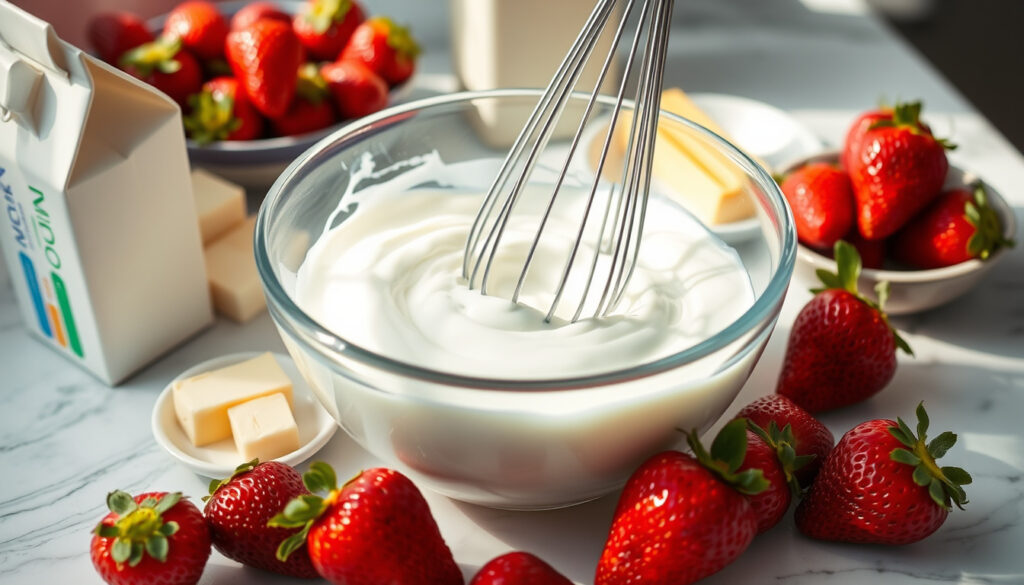
What Is Heavy Cream? Definition, Uses & Substitutes
Heavy cream must legally contain at least 36% milk fat in the United States, making it the richest common dairy cream available at most grocery stores—and the only variety that reliably holds stiff peaks when whipped.
Fat Content: 36-40% milkfat · Common Names: Heavy whipping cream · UK Equivalent: Double cream · Primary Uses: Whipping, sauces, soups · Minimum Fat for Whipping: 36%
Quick snapshot
- Heavy cream contains no less than 36% milk fat according to FDA standards (U.S. Dairy)
- Double cream (UK) has approximately 48% fat, thicker than US heavy cream (U.S. Dairy)
- Exact naming conventions vary across Irish and Spanish-speaking supermarkets
- Regional labeling differences for imported cream products
- FDA cream standards have remained consistent for decades
- Growing demand for non-dairy whipping alternatives since 2020
- Plant-based heavy cream alternatives gaining market share
- Increased consumer focus on fat percentages for health reasons
| Label | Value |
|---|---|
| Fat Percentage | 36% minimum |
| Texture | Thick, whippable |
| UK Name | Double cream |
| Calories per tbsp | 50-60 |
| Whipping Peak Time | 3-5 minutes |
| Alternative Name | Heavy whipping cream |
What Is Heavy Cream?
Heavy cream is the thick, high-fat portion of milk that rises to the top when milk is left to settle—a natural separation process in non-homogenized milk. Commercially, it’s produced by centrifuging milk to concentrate the fatty layer, then pasteurizing or ultra-pasteurizing it for shelf life. In the United States, heavy cream must legally contain no less than 36% milk fat according to FDA labeling standards, making it the richest common dairy cream available at most grocery stores. The term “heavy whipping cream” is used interchangeably with “heavy cream” on packaging, referring to the same product.
What is considered heavy cream?
- Milk fat content of 36% or higher
- Pasteurized or ultra-pasteurized for safety and storage
- The thickest natural layer of milk that rises during separation
- Sold in refrigerated dairy sections of most supermarkets
The implication: these criteria distinguish heavy cream from lighter dairy products and ensure consistent performance in both cooking and whipping applications.
What is another name for heavy cream?
Heavy cream is most commonly called “heavy whipping cream” on American packaging. This dual name reflects its two primary uses: cooking applications where richness is desired, and whipping applications where stable peaks are needed. In the United Kingdom, the equivalent product is called “double cream,” which contains approximately 48% fat—significantly higher than the American standard. In India, cream labeled “heavy” typically refers to products with 35% or more milk fat, used specifically for frosting and cake decoration.
Is Heavy Cream the Same as Double Cream?
Heavy cream and double cream are similar dairy products but not identical. Double cream—the UK equivalent—contains approximately 48% milk fat, making it substantially richer and thicker than American heavy cream, which must meet a minimum of 36% milk fat. This fat difference means double cream is so thick it can be dolloped directly onto scones without whipping, while American heavy cream requires at least the minimum fat content to hold whipped peaks. Major UK retailers like Tesco sell double cream alongside other varieties, while American heavy cream serves as the practical substitute when double cream isn’t available.
What is heavy cream in the UK?
In the United Kingdom, heavy cream doesn’t exist as a standard product category. Instead, British supermarkets offer double cream (approximately 48% fat), clotted cream (at least 55% milkfat, made by heating cream to form a thick layer), whipping cream (30-36% fat), and single cream (18% fat). Double cream is the closest UK equivalent to American heavy cream, though its significantly higher fat content makes it considerably richer. Tesco, Waitrose, and other major UK retailers stock double cream as a standard dairy item, typically in the refrigerated section alongside butter and other dairy products.
What is heavy cream called in supermarkets?
In American supermarkets, heavy cream appears on shelves under the full name “heavy whipping cream.” This labeling is mandated by FDA standards, which require cream products to display their type based on milk fat content. Looking for “heavy whipping cream” will always yield the correct product, though some stores also stock items labeled simply “heavy cream” as an alternate phrasing. At Tesco and other UK retailers, shoppers looking for the closest equivalent should seek out “double cream,” while Irish supermarkets may use regional labeling that varies from both American and British conventions.
Heavy Cream vs Whipping Cream
Heavy cream and whipping cream differ primarily in fat content, which directly affects their performance in recipes. Heavy cream contains 36-40% milk fat and produces stiff, stable peaks when whipped, holding its shape for piping and decorations. Whipping cream contains 30-36% milk fat and produces softer, more delicate peaks that lose loft faster over time. According to industry analysis from U.S. Dairy, this difference in fat content means heavy cream is better suited for piping or stabilizing whipped toppings, while whipping cream works better for lighter toppings over fruit or drinks. Both can be used interchangeably in cooking applications, though the final texture will differ noticeably.
Heavy cream vs whipping cream vs fresh cream
The table below compares these three cream types across fat content, whipping capability, and typical uses.
| Cream Type | Fat Content | Whippable | Best Uses |
|---|---|---|---|
| Heavy cream | 36-40% | Yes, stable peaks | Piping, sauces, ganache, soups |
| Whipping cream | 30-36% | Yes, soft peaks | Light toppings, drinks, lighter sauces |
| Fresh cream | 25% | No | Coffee, gravies, cooking |
| Double cream (UK) | 48% | Yes, very stable | Scones, desserts, thick applications |
| Clotted cream (UK) | 55%+ | No, already thick | Traditional scone service |
Heavy cream has 51 calories and 5.4g fat per tablespoon, while whipping cream has 44 calories and 4.6g fat per tablespoon. Higher fat creams are more versatile for most kitchen tasks, though the trade-off comes in caloric content and dietary considerations. Both heavy cream and whipping cream are keto-friendly with approximately 1.75g carbohydrates per quarter cup, making them suitable for low-carbohydrate eating patterns.
Half and half—which contains only 10.5-18% milk fat—cannot be whipped into peaks at all. Heavy cream and whipping cream can be substituted for each other in cooking, but they produce noticeably different results when whipped for toppings or decorations.
What Is a Substitute for Heavy Cream?
Finding a heavy cream substitute is straightforward when you understand what the product actually does: its high fat content provides richness in sauces and stability in whipped applications. The most effective substitutes either replicate the fat content directly or combine lower-fat liquids with fat to approximate heavy cream’s properties. For cooking applications where whipping isn’t required, options range from dairy-based combinations to fully plant-based alternatives. Non-dairy whipping cream, made from vegetable oil, has become a common substitute in commercial bakeries and is increasingly available for home use.
What is the closest substitute to heavy cream?
- Milk + butter: Add 1/4 cup melted butter to 3/4 cup whole milk—this combination provides approximately 36% fat content and works well in most cooking applications
- Coconut cream: The solid portion from a chilled can of coconut milk matches heavy cream’s fat content and works for both cooking and whipping
- Greek yogurt + milk: Mix equal parts Greek yogurt and milk for a tangy substitute suited to soups and sauces
- Non-dairy whipping cream: Vegetable oil-based products marketed as “whipped topping” provide similar functionality without dairy
What to use if I don’t have any heavy cream?
For most cooking applications, the milk and butter combination provides the closest functional match to heavy cream. Simply melt 1/4 cup (about 57g) of butter and whisk it into 3/4 cup (177ml) of whole milk until thoroughly combined. This DIY heavy cream alternative contains the same approximate fat percentage and works well in soups, sauces, and casseroles. For vegan or dairy-free cooking, coconut cream remains the top choice—it whips well, adds richness to sauces, and maintains a neutral flavor when paired with complementary ingredients. Commercial non-dairy heavy cream alternatives have improved significantly, though performance varies by brand.
Heavy cream and whipping cream can technically be used interchangeably in cooking, but the difference becomes critical when whipping: heavy cream reaches stiff peaks in 3-5 minutes and holds them, while whipping cream produces softer results that deflate faster.
How Do I Make Heavy Cream If You Don’t Have Any?
Making heavy cream at home is a simple ratio-based process that yields a functional substitute for most cooking applications. The basic formula combines milk—the higher fat percentage the better—with butter to create the necessary fat content. This homemade version works adequately in cooked dishes but may not whip as successfully as commercial heavy cream due to differences in emulsification and fat structure. For baking applications where heavy cream serves as both fat and liquid, this DIY approach provides a workable solution when the original ingredient is unavailable.
Heavy cream for cooking
- Soups and sauces: Use the milk + butter combination at a 1:1 ratio replacement for heavy cream
- Pasta dishes: Add during the final minutes of cooking; the mixture thickens as it simmers
- Mashed potatoes: Stir in for extra richness without the expense of premium cream
Heavy cream in baking
- Ganache: Heat heavy cream and pour over chocolate in a 1:1 ratio; the high fat content ensures a smooth, glossy result
- Custards and ice cream: Heavy cream provides the fat needed for a creamy texture and proper body
- Quick breads: Adds moisture and tenderness; substitute at equal amounts in most recipes
Heavy cream for pasta
Heavy cream is a staple in classic pasta sauces like alfredo, where it provides the rich, velvety texture that coats each strand. The cream’s fat content emulsifies with parmesan cheese to create a smooth sauce that clings to pasta without separating. For a quick alfredo using the milk and butter substitute, heat the mixture until it begins to thicken, then toss with cooked pasta and cheese. The sauce will be slightly lighter than one made with full heavy cream but works well for everyday cooking. Heavy cream also forms the base for carbonara variations and creamy tomato sauces.
Related reading: dairy cows · apple cider vinegar benefits
Grasping fat differences from whipping cream proves essential since heavy cream’s higher fat enables stiff peaks vital for sauces, soups, and baking success over lighter options.
Frequently asked questions
Does Tesco have heavy cream?
Tesco, the major UK retailer, does not stock American-style “heavy cream.” Instead, Tesco sells double cream (approximately 48% fat), extra thick double cream, whipping cream, and single cream. Double cream is the closest equivalent and can be used as a substitute for heavy cream in most recipes, though it is richer due to its higher fat content.
What is heavy cream in Ireland?
In Ireland, dairy products often follow British labeling conventions rather than American ones. Irish supermarkets typically stock “whipping cream” (30-36% fat), “extra thick cream,” and “clotted cream” rather than products labeled “heavy cream.” When a recipe calls for heavy cream in Ireland, whipping cream with a higher fat percentage or imported American heavy cream would be the best substitutes.
What is heavy cream in Spanish?
In Spanish-speaking countries and grocery stores, heavy cream is typically called “crema para batir” (whipping cream) or “crema espesa” (thick cream). The exact labeling varies by country—in Mexico it may appear as “crema de leche,” while in Spain look for “nata para montar” for whipping applications. The fat content and functionality are similar to American heavy cream, though labeling requirements differ by region.
What is heavy cream used for in pasta?
Heavy cream is used in pasta dishes to create rich, creamy sauces that coat noodles evenly. Classic applications include alfredo sauce, carbonara variations, and creamy tomato-based sauces. The high fat content emulsifies with cheese and other ingredients to create a smooth, clinging sauce texture that won’t separate during serving.
What is heavy cream for baking?
In baking, heavy cream serves multiple functions: it adds moisture and fat to batters and doughs, provides richness for custards and puddings, and creates the foundation for whipped ganache toppings. Its high fat content also tenderizes baked goods while contributing to a tender, rich crumb. Heavy cream is essential for recipes like cream biscuits, scones, and certain pie fillings where the fat and liquid properties are both important.
What is the closest substitute to heavy cream?
The closest substitute for heavy cream is a mixture of milk and melted butter in a 3:1 ratio (three parts milk to one part butter). This combination approximates the fat content of heavy cream and works well in most cooked dishes. For dairy-free cooking, coconut cream provides the closest match in both texture and fat content, though the flavor profile differs noticeably.
What experts say
That slight difference in fat content means heavy cream is better for piping or stabilizing whipped toppings, while whipping cream is lighter.
— U.S. Dairy (Industry Association)
Heavy cream has slightly more fat than whipping cream, and that difference affects both nutrition and culinary performance.
— Ariane Lang, BSc, MBA (Author, Healthline)
More related posts
 Deputy Prime Minister NZ – Current Holder, Role and History
 Best Places to Fly Drones in Ireland: Legal Spots
 How Often Should You Wash Your Hair? Complete Guide 2025
 AA Roadside Assistance NZ: Costs, Coverage & How to Call
 NZD to INR Rate: Lakh & Crore Conversion
 When Is the Next OCR Announcement? 2026 Schedule & Forecast
 House of the Dragon Season 3: Release Date and Cast
 ATM Machine Near Me: Find Free ATMs, Fees & Daily Limits in Ireland
