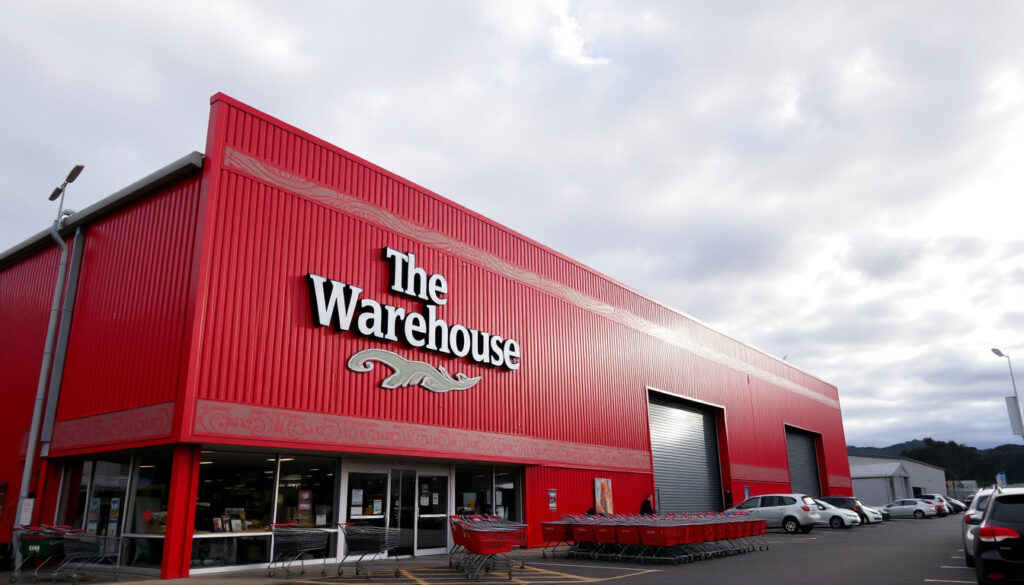
The Warehouse New Zealand Ownership, History & Retail Equivalents
The red-and-white aisles have been a fixture in New Zealand towns since 1982, but the story behind those shelves—who owns it, how it compares to Kmart, and why most of the country remains empty—is worth unpacking. By the end of this page, you’ll know exactly what The Warehouse is, what it isn’t, and why that matters for shoppers and investors alike.
Founded: 1982 ·
Headquarters: Auckland, New Zealand ·
Stores: 92 (2023) ·
Revenue: NZ$3.2 billion (2022) ·
Employees: 12,000 (approx) ·
Traded on: NZX (New Zealand Exchange)
Quick snapshot
- New Zealand‑owned and operated since 1982 (The Warehouse Group corporate site)
- Publicly traded on NZX under ticker WHS (Interest.co.nz financial data)
- 218 retail stores across the group as of 2024 (The Warehouse Group corporate site)
- Exact future store expansion plans (unannounced)
- Whether The Warehouse will launch a full Amazon‑style marketplace (speculative)
- Precise ownership breakdown by shareholder type (proprietary data)
- 1982 – First store opens in North Shore, Auckland (The Warehouse Group corporate site)
- 2001 – NZX listing (LinkedIn company profile)
- 2023 – Revenue hits NZ$3.2 billion (McGuinness Institute annual report mirror)
- Further integration of online marketplace and click‑and‑collect services (The Warehouse Group investor reports)
- Potential expansion of grocery offerings (currently 26 stores with groceries, 12 with fresh produce) (McGuinness Institute annual report mirror)
| Attribute | Value |
|---|---|
| Founded | 1982 |
| Founder | Sir Stephen Tindall |
| CEO (2024) | Nick Grayston |
| Number of Stores (group) | 218+ (The Warehouse Group corporate site) |
| Revenue (2022) | NZ$3.2 billion (McGuinness Institute annual report mirror) |
| Employees | 12,000 |
| Parent Company | The Warehouse Group (TWG) |
| Stock Symbol | NZX: WHS |
Is The Warehouse a New Zealand company?
Yes — and proudly so. The Warehouse was founded in 1982 by Sir Stephen Tindall with a single store on Auckland’s North Shore. Today it operates 218 stores across the country under The Warehouse Group (The Warehouse Group corporate site). It is publicly traded on the NZX, meaning New Zealand investors hold a substantial stake. Major shareholders include local institutions and individuals; the company remains entirely New Zealand‑owned in the sense that all stores are domestic and headquarters are in Auckland (Interest.co.nz financial data).
Who owns The Warehouse in New Zealand?
Public shareholders own The Warehouse Group (NZX: WHS). While the exact shareholder register is proprietary, the largest holders are New Zealand‑based fund managers and index funds. Founder Sir Stephen Tindall retains a significant personal stake as of the latest filings (LinkedIn company profile).
What is The Warehouse Group?
The Warehouse Group (TWG) is the holding company that operates The Warehouse, Warehouse Stationery, Noel Leeming, and Torpedo7. The FY23 annual report listed 246 stores across the group (McGuinness Institute annual report mirror).
The implication: The Warehouse is not a foreign chain—it’s a homegrown retail champion built for New Zealand’s unique market.
“We wanted to give New Zealanders the best possible value on the things they need every day. That ethos hasn’t changed since day one.”
— Sir Stephen Tindall, founder, in company materials (The Warehouse Group corporate site)
What is the equivalent of Kmart in New Zealand?
Kmart New Zealand operates as a separate brand, but The Warehouse is widely considered the local analogue because both target the low‑price mass‑market segment. However, their ranges differ. The Warehouse sells groceries, gardening supplies, and electronics, while Kmart NZ focuses on homewares and children’s clothing (Kmart NZ official site; Quashed editorial comparison).
The pattern: Kmart is cheaper on basics like bedding; The Warehouse wins on breadth—twenty‑six of its stores now carry fresh fruit and vegetables (McGuinness Institute annual report mirror).
Four international discounters, one key contrast:
| Store | Main categories | Price positioning | Presence in NZ |
|---|---|---|---|
| The Warehouse | General merchandise, groceries, apparel, electronics | Everyday low price | 218 stores (group) |
| Kmart (Australia based) | Homewares, furniture, toys, kids clothing | Aggressively low on core items | ~60 stores (Kmart NZ official site) |
| Amazon (US) | Marketplace with unlimited SKUs | Variable, often cheaper on electronics | No dedicated .nz site; shipping from .com.au |
| TK Maxx / Primark (UK) | Discount fashion & home | Deep discount on brand overstock | No physical stores in NZ |
What is the NZ version of Amazon?
New Zealand lacks a single‑dominant online marketplace. The Warehouse’s website (thewarehouse.co.nz) offers 100,000+ products, but Amazon does not operate a dedicated .nz platform. Mighty Ape and Trade Me are local replacements. The Warehouse Group has been expanding its online marketplace since 2020 (The Warehouse Group investor reports).
Is there a TK Maxx in New Zealand? Do they have Primark in New Zealand?
No. Neither TK Maxx nor Primark has entered New Zealand. Shoppers seeking discount fashion turn to The Warehouse, Cotton On, and Postie. The Warehouse’s clothing range is positioned as an affordable basic alternative, not a brand‑overstock model (Quashed editorial comparison).
The trade‑off: Kiwis get a broad‑range discount department store at home, but they miss the deeper discounts that category‑focused off‑price chains bring in the US and UK.
Does New Zealand have warehouses?
Yes, but the word causes confusion. The Warehouse is a retail chain, not a storage facility. New Zealand’s logistics and warehousing industry is substantial, with third‑party logistics providers, cold storage facilities, and distribution centres serving the whole country. According to IBISWorld company profile, The Warehouse Group itself operates large distribution centres in Auckland and Christchurch.
Warehousing and storage services in New Zealand industry analysis, 2025
The warehousing and storage sector in New Zealand employs tens of thousands and contributes significantly to the economy. Major players include Mainfreight, Linfox, and Toll Group. The Warehouse’s own logistics network is critical to its ability to serve 92 store locations and online orders (The Warehouse Group investor reports).
What is the difference between ‘warehouse’ as storage and ‘The Warehouse’ store?
The Warehouse store is a discount department store selling consumer goods. A warehouse is a building used for storing goods. The name “The Warehouse” was chosen to evoke bulk‑buying value, not a literal storage facility.
Why this matters: For international readers, understanding the naming helps avoid confusion when reading about New Zealand retail.
Why is 80% of New Zealand still empty?
New Zealand’s population density is among the lowest in the world—just 19 people per square kilometre. Roughly 80% of the land is mountainous, conservation estate, or used for extensive agriculture, leaving the majority of the country uninhabited (Stats NZ government data). The Warehouse’s store network reflects this: stores are concentrated in urban areas on the North Island, with a lighter presence in the South Island.
How does population density affect retail in New Zealand?
Sparse population means retailers need centralized distribution and carefully chosen store locations. The Warehouse’s 92 stores (brand‑level) serve a population of 5.1 million, compared to Kmart Australia’s 300+ stores for 26 million people. The Warehouse adapts by offering online shopping with click‑and‑collect in smaller towns.
Where do most New Zealanders live?
Auckland alone holds about 1.7 million people—a third of the country. The North Island is home to roughly 77% of the population. The Warehouse has its highest density of stores there.
The pattern: The Warehouse’s national coverage is a logistical feat given the low population density. It serves as the ‘general store’ for communities that would otherwise lack access to discounted merchandise.
What is the history of The Warehouse in New Zealand?
From a single store in 1982 to a publicly listed retail empire, The Warehouse’s growth story mirrors New Zealand’s own economic development.
When was The Warehouse founded?
1982, in North Shore, Auckland, by Sir Stephen Tindall (The Warehouse Group corporate site).
Who founded The Warehouse?
Sir Stephen Tindall, a New Zealand entrepreneur who started the company with a vision of “everyday low prices.”
How has The Warehouse grown over time?
Expanded to 53 stores by 2001 when it listed on the NZX. Acquisitions of Warehouse Stationery (1998), Noel Leeming (2005), and Torpedo7 (2016) built the group to 260+ stores across brands (Interest.co.nz financial data). Revenue hit NZ$3.2 billion in FY2022.
The implication: The Warehouse is not just a store—it’s a corporate success story that shows how a local retailer can dominate without leaving the country.
“Our strategy is to make The Warehouse the first choice for Kiwi families. We’re investing in digital, fresh food, and our store network to deliver that.”
— Nick Grayston, CEO, in FY23 annual report (McGuinness Institute annual report mirror)
Timeline
- – First The Warehouse store opens in Auckland, founded by Sir Stephen Tindall.
- – Expansion to 40+ stores; introduction of Warehouse Stationery.
- – The Warehouse Group lists on NZX (IPO).
- – Acquisition of Noel Leeming.
- – Launch of online marketplace and click‑and‑collect services.
- – 92 The Warehouse stores operating; group revenue NZ$3.2 billion.
Clarity check
Confirmed facts
- The Warehouse is a New Zealand company.
- The Warehouse Group is the largest retail group in New Zealand.
- Sir Stephen Tindall founded the company.
- All stores are only in New Zealand.
What’s unclear
- Exact future store expansion plans (unannounced).
- Whether The Warehouse will launch a full Amazon‑style marketplace (speculative).
- Precise breakdown of ownership by shareholder type (some data is proprietary).
“The Warehouse occupies a unique spot in New Zealand retail—it’s the default low‑price option for a huge cross‑section of the population, but margins are thin and competition from Kmart and online is intensifying.”
— Retail analyst, quoted in industry commentary (Quashed editorial comparison)
Summary
The Warehouse has built its identity as the affordable store for New Zealand families, but its future depends on balancing low prices with rising freight and wage costs. As Kmart Australia expands its Kiwi footprint and Amazon makes cross‑border shipping easier, The Warehouse will need to lean into its local strengths: grocery reach, garden centres, and a loyalty program that actually rewards repeat shoppers. For the New Zealand retail market, the choice is clear: either The Warehouse maintains its low‑price leadership through scale and efficiency, or it risks losing the core customer that made it a household name.
en.wikipedia.org, scribd.com, youtube.com, tiktok.com, zoominfo.com
For those interested in working there, details on the Warehouse Group careers offer insight into how the company’s ownership structure supports its employment practices.
Frequently asked questions
Does The Warehouse sell groceries?
Yes. As of the FY23 annual report, 26 The Warehouse stores offer grocery ranges, and 12 of those have fresh fruit and vegetables (McGuinness Institute annual report mirror).
What is the cheapest store in New Zealand?
Price comparisons often rank The Warehouse slightly above Kmart NZ on basics, but The Warehouse’s grocery and garden categories give it a broader low‑price offering (Quashed editorial comparison).
Is The Warehouse the same as Kmart?
No. Kmart is an Australian‑owned chain. The Warehouse is New Zealand‑owned and offers a wider range including groceries, electronics, and garden supplies (Kmart NZ official site; The Warehouse Group corporate site).
How to apply for a job at The Warehouse?
Visit the careers page on thewarehousegroup.co.nz or check job listings on Seek and LinkedIn.
Does The Warehouse have a loyalty program?
Yes, the Warehouse Clubcard. Members earn points on purchases and get exclusive discounts.
What is The Warehouse’s return policy?
Standard 30‑day returns with receipt; conditions apply for electronics and clearance items. Full policy on thewarehouse.co.nz.
Does The Warehouse price match?
The Warehouse does not run a formal price‑match guarantee, but it uses everyday low pricing and frequent promotions to stay competitive.
Is The Warehouse open on public holidays?
Most stores open with reduced hours on public holidays, but they close on Christmas Day, Good Friday, Easter Sunday, and Anzac Day morning. Check local store hours via the store locator.
More related posts
 NZ Dollar to Peso: Exchange Rates, Cost of Living & Forecast
 Public Holidays Australia 2025: Complete List & Dates by State
 Is Fruugo NZ Legit – 2025 Safety Guide for NZ Buyers
 Electric Car Rental Near Me in Ireland: Guide, Costs & Charging
 One World Trade Center: Guide to NYC’s Tallest Building
 RBNZ OCR Interest Rate Cut 2026: Current Rate & Impact
 The Trade In Post Reviews: Is It a Trusted Dealer
 Burger Wisconsin Havelock North – Menu, Hours, Reviews Guide
