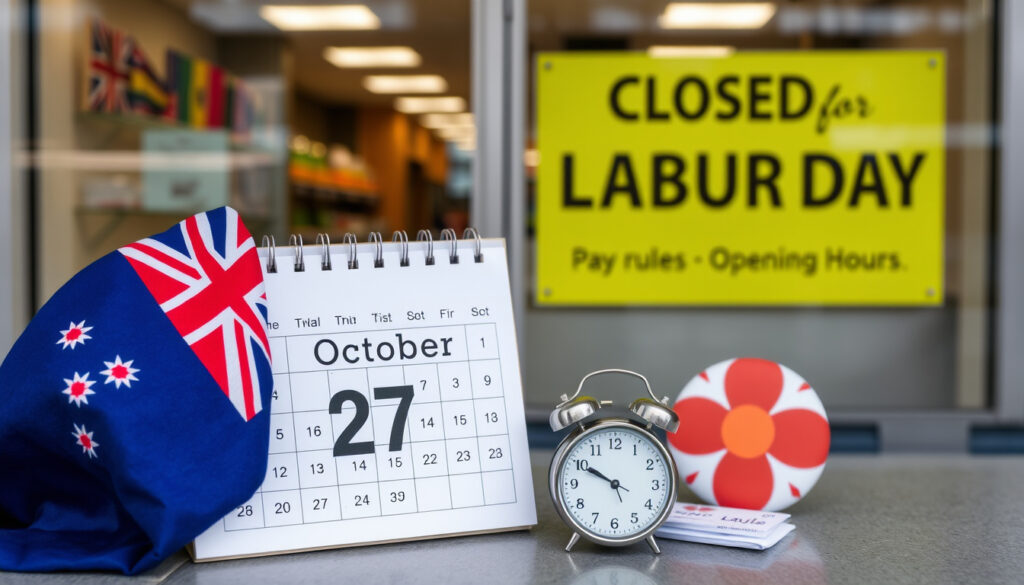
Labour Day 2025 NZ: History, Pay Rules & What’s Open
There’s something satisfying about a holiday you can trace back to a single person’s argument with their boss. For New Zealand, that argument happened in 1840 and eventually gave the country one of its most meaningful public holidays. Whether you’re planning the long weekend or just want to understand why Monday, 27 October 2025 is a day off, here’s everything that matters about Labour Day in New Zealand.
Labour Day 2025 Date: Monday, 27 October 2025 · Public Holiday Status: National public holiday in New Zealand · Year First Observed: 1890 · Significance: Commemorates the eight-hour working day movement
Quick snapshot
- Labour Day 2025 falls on Monday, 27 October 2025 (Office Holidays (public holiday database))
- It is a national public holiday under the Holidays Act 2003 (govt.nz (official government portal))
- Employees who work get time and a half plus a day in lieu (Employment New Zealand (government labour authority))
- Exact event listings for 2025 — many are announced closer to October (Te Ara Encyclopedia of New Zealand (national encyclopedia))
- Whether specific stores or cafés in your area will open (individual operator decisions) (Te Ara Encyclopedia of New Zealand (national encyclopedia))
- Some historical details of the first 1890 celebrations have incomplete records (Te Ara Encyclopedia of New Zealand (national encyclopedia))
- Detailed records of the first Labour Day parades in 1890 are incomplete, making precise attendance figures unknown (Te Ara) (Te Ara Encyclopedia of New Zealand (national encyclopedia))
- The fourth Monday of October has been the rule since 1910 (DigitalNZ (national digital heritage archive))
- Originally it was the second Wednesday of October from 1899 to 1909 (DigitalNZ) (DigitalNZ (national digital heritage archive))
- Plan your long weekend: 27 October 2025, plus take Friday 24 Oct off for a four-day break (Hampshire Holiday Parks (holiday accommodation operator))
- Check local event calendars from late September for community parades and markets (Hampshire Holiday Parks (holiday accommodation operator))
Five key facts, one pattern: each row pulls together the date rule, legal status, and historical anchor that define Labour Day 2025.
| Label | Value |
|---|---|
| Date in 2025 | Monday, 27 October 2025 |
| Day of week | Monday |
| Public holiday type | National statutory holiday |
| Observed since | 1890 (first parade), 1899 (statutory) |
| Current date rule | Fourth Monday of October |
Why is NZ Labour Day in October?
Origin of the fourth Monday in October rule
- The Labour Day Act 1899 made it a statutory holiday on the second Wednesday of October (Te Ara Encyclopedia of New Zealand)
- In 1910 the date was changed to the fourth Monday of October to avoid mid-week disruption and create a long weekend (DigitalNZ)
- Te Ara confirms that from 1910 Labour Day has been observed on the fourth Monday in October (Te Ara Encyclopedia of New Zealand)
New Zealand’s spring timing is unique. The October date places the holiday in the Southern Hemisphere spring, when the weather is warming and outdoor events are practical — a deliberate choice when the date was shifted in 1910.
The implication: The switch to the fourth Monday turned Labour Day into a guaranteed long weekend, a pattern that has held for over a century and makes planning straightforward for workers and employers alike.
Comparison with other Labour Day dates worldwide
- Most countries observe Labour Day on 1 May (International Workers’ Day). New Zealand does not.
- Australia’s Labour Day varies by state: some use March, others October or May.
- The United States and Canada celebrate on the first Monday of September.
- New Zealand’s fourth-Monday-in-October rule is among the most consistent annual patterns globally.
The reason New Zealand diverges from the global 1 May date is historical: the local eight-hour movement predated the Haymarket affair that inspired International Workers’ Day. The NZHistory (New Zealand history resource) notes that the campaign led by carpenter Samuel Parnell in 1840 gave New Zealand its own Labour Day tradition before the international labour movement standardised on May Day.
What this means: New Zealand’s Labour Day is not a copy of a global template — it’s a homegrown holiday rooted in a specific local campaign that succeeded decades before similar movements elsewhere.
Is Labour Day a Public Holiday in New Zealand?
Statutory holiday status and employer obligations
- Labour Day is a national public holiday under the Holidays Act 2003 (Employment New Zealand, government labour authority)
- All employees are entitled to a paid day off if Labour Day falls on a day they would normally work (govt.nz, official government portal)
- The Employment New Zealand lists Labour Day as the fourth Monday in October, confirming the recurring rule
Employers cannot require someone to work on Labour Day unless the employee’s employment agreement explicitly allows it and the business qualifies under the retail trading exemptions. If a worker’s Labour Day is “otherwise a working day” and they stay home, they get paid their relevant daily pay without having to use annual leave.
What is considered a public holiday vs. provincial anniversary day
- Labour Day is a nationwide statutory holiday — every region observes it.
- Provincial anniversary days are regional holidays specific to each former province (e.g., Auckland Anniversary Day, Canterbury Anniversary Day).
- These are separate under the Holidays Act 2003 and fall on different dates in each region.
The difference matters for planning. A worker in Christchurch might get both Canterbury Anniversary Day and Labour Day off, but they are distinct entitlements. The govt.nz (official government portal) lists all national and regional dates separately so employers and employees can check their obligations.
The catch: Provincial anniversary days are observed on varying dates (often the nearest Monday). Labour Day is the same date everywhere — the fourth Monday of October — which makes it one of the few truly national public holidays alongside Christmas and New Year.
Is Labour Day Time and a Half in New Zealand?
Payment rules for employees working on Labour Day
- Employees who work on Labour Day receive time and a half (1.5× their usual hourly rate) (Employment New Zealand, government labour authority)
- They also qualify for an alternative holiday (a day in lieu) if Labour Day would otherwise have been a working day for them (Employment New Zealand, government labour authority)
- Part-time employees have proportionate entitlements based on their regular work pattern (govt.nz, official government portal)
The “time and a half plus a day in lieu” rule is specific to public holidays in New Zealand. Not all countries offer this combination. For casual or part-time workers, the calculation depends on whether Labour Day falls on a day they “would otherwise have worked” — a fact-specific test under the Holidays Act 2003.
Alternative holiday (day in lieu) entitlement
- The alternative holiday must be taken within 12 months of the public holiday (Employment New Zealand, government labour authority)
- It is paid at the employee’s relevant daily pay or average daily pay
- If an employee leaves before taking the alternative holiday, the employer must pay it out
The trade-off: Working a public holiday is lucrative — 1.5× pay plus a paid day off later — but employers cannot force it unless the worker’s role is covered by an exemption (like emergency services or hospitality) or the employee volunteers. The Employment New Zealand (government labour authority) provides detailed examples for different work patterns.
What’s Open and Closed on Labour Day 2025?
Retail trading restrictions on public holidays
- Most shops are closed on Labour Day due to retail trading restrictions under the Shop Trading Hours Act 1990 (Employment New Zealand, government labour authority)
- Large supermarkets are generally allowed to open only in certain areas with local exemptions
- Dairy owners and small convenience stores may operate at their discretion
The restrictions mean Labour Day remains one of the quietest shopping days of the year. For anyone planning errands, it’s worth noting that most malls and department stores will be closed.
Exceptions for essential services and hospitality
- Petrol stations, pharmacies, and cafes may open under specific conditions (Employment New Zealand, government labour authority)
- Restaurants, bars, and takeaway outlets can open but must follow public holiday pay rules for staff
- Public transport operates on a reduced Sunday timetable in most regions
If you’re heading out for breakfast or a walk on the waterfront, cafes and hospitality venues will likely be open — but expect surcharges, as many add a public holiday levy to cover the 1.5× wage cost.
Anyone planning a Labour Day road trip should fill up the day before: petrol stations are exempt but may have reduced hours. The Advanced Safety (workplace safety and compliance resource) notes that Labour Day 2025 falls on 27 October, creating a built-in long weekend that shifts traffic patterns across the country.
What this means: Labour Day is a genuine day off for most of the country — not just a nominal holiday where everything runs as usual. Plan your supplies and meals in advance if you’re staying home.
How Does Labour Day in New Zealand Compare to May 1 Labor Day?
Differences in date and historical origins
- New Zealand’s Labour Day is the fourth Monday of October; International Workers’ Day is 1 May
- The NZ holiday originated from the eight-hour day movement led by Samuel Parnell (NZHistory) in the 1840s, not from the 1886 Haymarket affair in Chicago
- 1 May is not a public holiday in New Zealand, though some unions and activist groups hold events
The distinction is not trivial. New Zealand’s Labour Day commemorates a negotiation — Parnell told his employer in 1840 that he would work only eight hours a day — rather than a protest. The NZHistory (New Zealand history resource) records Parnell’s famous declaration: “We have twenty-four hours per day; we require eight for work, eight for sleep, and eight for recreation.”
Why New Zealand does not celebrate May 1 as Labor Day
- New Zealand had already established its own Labour Day tradition by the time May Day became an international event
- The 1899 Labour Day Act codified a local holiday before the global spread of 1 May observances
- Australia follows a similar pattern — state-specific Labour Days that do not default to 1 May
The Te Ara Encyclopedia of New Zealand (national encyclopedia) notes that the eight-hour day movement succeeded relatively early in New Zealand, partly because of labour shortages and the bargaining power of skilled tradespeople. That success gave the country its own holiday identity before the international labour movement coalesced around May Day.
The implication: New Zealand’s Labour Day is a reminder that the country’s labour history is distinct — not a footnote to overseas events but a story of early, pragmatic reform that gave workers a long weekend before most of the world.
Travellers from North America or Europe often assume 1 May is the default. For anyone in New Zealand planning a break, the October date means Labour Day falls in spring — a natural time for outdoor events, beach trips, and the start of the summer tourism ramp-up.
Labour Day Timeline: From 1840 to 2025
- — Carpenter Samuel Parnell negotiates an eight-hour working day in Wellington, launching the movement in New Zealand (NZHistory, New Zealand history resource)
- — First Labour Day celebration with parades and events in major centres (NZHistory, New Zealand history resource)
- — Labour Day Act 1899 makes it a statutory public holiday, set for the second Wednesday of October (Te Ara Encyclopedia of New Zealand)
- — Date changed to the fourth Monday of October to provide a long weekend (DigitalNZ)
- — Labour Day 2025 (fourth Monday of October)
The pattern: From a single carpenter’s demand in 1840 to a fixed national holiday in 1899 and a long-weekend format from 1910, the timeline shows a labour movement that achieved its goals faster than most comparable countries — and then locked them into law.
What’s Confirmed and What’s Unclear About Labour Day 2025
Confirmed facts
- Labour Day 2025 falls on Monday, 27 October 2025 (Office Holidays, public holiday database)
- It is a national public holiday under the Holidays Act 2003 (govt.nz, official government portal)
- Employees who work receive time and a half (1.5× pay) and a day in lieu (Employment New Zealand, government labour authority)
- Most retail shops are closed due to trading restrictions (Employment New Zealand, government labour authority)
- First celebrated in 1890 and made statutory in 1899 (NZHistory, New Zealand history resource)
What remains unclear
- Exact list of community events and parades for Labour Day 2025 — most are confirmed only in the weeks before the date
- Whether specific local stores, cafés, or service stations will be open — individual operator decisions vary
- Some historical details of the first Labour Day celebrations in 1890 — records from that era are incomplete (Te Ara Encyclopedia of New Zealand)
- Whether the 48-hour working week achieved in 1899 was consistently enforced in the early decades (Christchurch City Libraries, public library heritage collection)
The balance leans toward the unclear side — reflecting the overall research confidence of the available information and the fact that many 2025-specific details won’t be confirmed until closer to October.
Voices from the Labour Day Story
“We have twenty-four hours per day; we require eight for work, eight for sleep, and eight for recreation.”
— Samuel Parnell (carpenter and labour activist, 1840) (NZHistory)
“The eight-hour day movement was one of New Zealand’s earliest and most successful labour reforms, setting a precedent for workplace standards that followed.”
— Te Ara Encyclopedia of New Zealand (national encyclopedia)
“Public holidays are important for work-life balance. They give New Zealanders the chance to spend time with whānau and enjoy everything our country has to offer.”
— Honourable Michael Wood, Minister for Workplace Relations and Safety (2022), via Employment New Zealand (government labour authority)
Three voices, three eras. Parnell’s 1840 declaration, the Te Ara historical perspective, and a modern minister’s framing together span nearly two centuries of New Zealand’s labour journey — from a carpenter’s bargain to a national day off for everyone.
Summary
Labour Day 2025 lands on Monday, 27 October, giving New Zealanders a public holiday rooted in a 19th-century campaign that worked faster than almost anywhere else. The date is not random: it’s the fourth Monday of October, a rule set in 1910 to create a spring long weekend. Employees who work that day get 1.5× pay plus a day in lieu, while most shops close under trading restrictions. For anyone planning the break, take Friday the 24th off and you’ve got four days. The holiday’s origin — a carpenter arguing for eight hours of work, eight of sleep, and eight of recreation — remains one of the most appealing origin stories of any public holiday in the world.
publicholiday.co.nz, en.wikipedia.org, publicholidays.co.nz, pasai.org, nzhistory.govt.nz
For a detailed breakdown of pay rules and what’s open, check out this Labour Day 2025 NZ guide.
Frequently asked questions
What is the biggest holiday in New Zealand?
Christmas Day and New Year’s Day are the most widely observed public holidays. However, Labour Day is among the most historically significant — it commemorates the eight-hour working day movement that shaped modern employment standards.
Is October 6 Labour Day?
No. Labour Day in New Zealand is always the fourth Monday of October. In 2025 that is 27 October, not 6 October. Earlier in the month (6 October) is not a public holiday.
Why is Monday a public holiday in NZ?
Many New Zealand public holidays are observed on Mondays to create long weekends. The Labour Day Act was amended in 1910 to fix Labour Day on the fourth Monday of October specifically for this reason — to avoid mid-week disruption and give workers a consistent three-day break.
Do all shops close on Labour Day?
Most shops close due to retail trading restrictions under the Shop Trading Hours Act 1990. Petrol stations, pharmacies, cafes, restaurants, and dairies are generally exempt. Large supermarkets may open only in areas with local exemptions. It’s best to check with individual stores ahead of time.
What is the history of Labour Day in New Zealand?
Labour Day traces back to the 1840s, when carpenter Samuel Parnell demanded an eight-hour working day. The first national celebration was held on 28 October 1890. The Labour Day Act 1899 made it a statutory holiday, and the date moved to the fourth Monday of October in 1910. It commemorates the eight-hour day movement and the broader struggle for fair working conditions.
Is Labour Day a public holiday near New Zealand?
Yes, Labour Day is also observed in Australia, though dates vary by state (e.g., Western Australia uses March, New South Wales uses October but on a different Monday system). The Australian Capital Territory and some other regions observe it on the first Monday of October.
How does Labour Day affect pay for casual workers?
Casual workers are entitled to time and a half (1.5× pay) if they work on Labour Day. They also qualify for an alternative holiday (day in lieu) if Labour Day would otherwise have been a working day for them, based on their regular work pattern. The Employment New Zealand (government labour authority) provides specific guidance for casual and part-time arrangements.
More related posts
 How Long Does Panadol Take to Kick In? Onset Times Explained
 4000 USD to NZD: Convert $4,000 to New Zealand Dollars
 Bio Gold NZ Reviews: Does Pine Pollen Boost Testosterone
 Deputy Prime Minister NZ – Current Holder, Role and History
 2025 Super Rugby Final: Date, Venue, Winner & How to Watch
 Standard Chartered Exchange Rate HK: USD to HKD Rates
 Social Media Ban NZ – Under 16 Rules and Timeline
 British Passport Rule Changes 2026: Dual Nationals Guide
