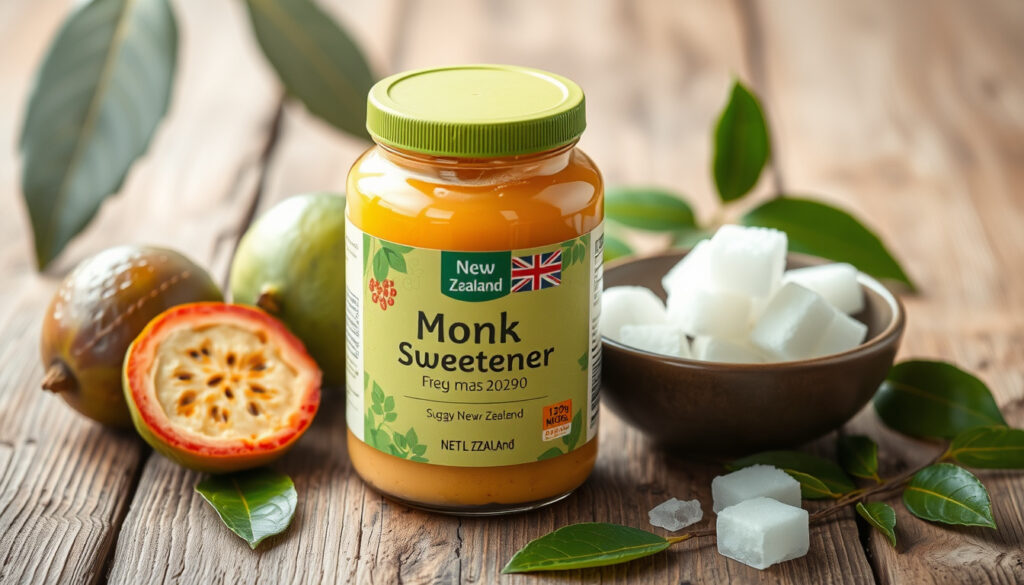
Monk Fruit Sweetener NZ: Downsides, Benefits & Where to Buy
If you’ve been scanning the shelves at Countdown or browsing online for a sugar alternative that doesn’t spike your blood glucose, monk fruit sweetener has probably caught your eye. It’s natural, zero-calorie, and increasingly available in New Zealand — but it also comes with a few surprises.
Sweetness vs sugar: 150–200 times sweeter ·
Calories per serving: 0 ·
Glycemic index: 0 ·
FDA status: Generally Recognized as Safe (GRAS)
Quick snapshot
- Derived from monk fruit (Siraitia grosvenorii) — a natural zero-calorie sweetener (HealthPost NZ (local health retailer))
- 150–200 times sweeter than sugar (HealthPost NZ)
- Does not raise blood sugar or contain calories (FDA (U.S. regulatory authority))
- Long-term health effects of mogrosides are still being studied
- Some studies suggest anti-inflammatory benefits, but more research is needed
- Exact cause of aftertaste in some blends is not fully understood
- FDA granted GRAS status to monk fruit extract in 2010 (FDA (U.S. regulatory authority))
- Growing availability in NZ supermarkets and online retailers
- More pure monk fruit extracts without erythritol expected to enter the market
Here are the key specs at a glance.
| Attribute | Value |
|---|---|
| Scientific Name | Siraitia grosvenorii |
| Sweetness vs Sugar | 150–200 times |
| Calories per Gram | 0 |
| Glycemic Index | 0 |
| FDA Status | GRAS (Generally Recognized as Safe) |
| Common Blends | Often mixed with erythritol |
What is the downside of using monk fruit sweetener?
Monk fruit sweetener is generally safe, but it’s not without drawbacks. The most common complaints involve digestive discomfort and aftertaste — especially when combined with erythritol, a sugar alcohol often used as a bulking agent.
Why are people avoiding monk fruit?
- Some people experience gas, bloating, or diarrhoea after consuming monk fruit blends that contain erythritol (Healthline (health information publisher)).
- The aftertaste — often described as cooling or metallic — is a common turn-off, especially in blends with erythritol.
- Pure monk fruit extract is extremely concentrated, making it tricky to use in recipes.
The pattern: digestive side effects are almost always linked to the erythritol bulking agent, not the monk fruit itself.
What are the potential side effects of monk fruit?
- Rare allergic reactions may occur in individuals sensitive to cucurbits (the gourd family).
- No known drug interactions at normal consumption levels.
- The Mayo Clinic (leading medical institution) notes that non-nutritive sweeteners like monk fruit are generally safe for most people.
Is monk fruit safe for everyone?
Yes, in moderation. The FDA has approved monk fruit extract as GRAS since 2010 (FDA). However, pregnant women and children should stick to recommended serving sizes. Always check the label for added fillers.
Most monk fruit sweeteners sold in NZ are blends with erythritol. If you’re sensitive to sugar alcohols, the “healthy” sweetener may leave you with an upset stomach. Pure monk fruit extract avoids this but requires careful measuring.
Is Monkfruit available in New Zealand?
Yes — monk fruit sweetener is steadily appearing in New Zealand supermarkets, pharmacies, and online stores. The range includes pure extracts, blends with erythritol, and liquid drops.
Where to buy monk fruit sweetener in New Zealand?
- Supermarkets: Woolworths (Countdown) stocks the Whole Earth brand of monk fruit granules (Smartfox NZ (online retailer)).
- Chemist Warehouse: Carries Lakanto Monkfruit Sweetener Classic 200g, nationwide click and collect available (Chemist Warehouse NZ (national pharmacy chain)).
- Health stores: HealthPost NZ sells SweetNZ Monk Fruit Extract 40g and NOW Foods Organic Monk Fruit Liquid (HealthPost NZ).
- Online specialists: Lakanto NZ official store (Lakanto NZ (brand’s official NZ store)), My Sugar Free NZ, and iHerb NZ (iHerb NZ (international health retailer)).
The implication: for NZ shoppers, convenience favours supermarkets, but the cleanest options require online orders.
Is monk fruit sweetener available at Chemist Warehouse?
Yes. Chemist Warehouse NZ lists Lakanto Monkfruit Sweetener Classic 200g for $15.99 and offers free click and collect.
Where to buy monk fruit sweetener at Countdown, New World, Pak’nSave?
- Woolworths (Countdown): Whole Earth Monk Fruit Sweetener Granules are available in select stores.
- New World and Pak’nSave: Limited selection — typically only Lakanto or Whole Earth blends. Check the health food aisle.
- Online alternative: HealthPost, Lakanto NZ, and My Sugar Free NZ ship nationwide.
What this means: supermarket brands are convenient but almost always contain erythritol. For pure monk fruit extract, you’ll need to order online from specialist retailers.
Which is healthier, monkfruit or stevia?
Both monk fruit and stevia are natural, zero-calorie sweeteners, but they differ in taste, sweetness, and side effects. Here’s how they stack up.
Here is a side-by-side comparison.
| Aspect | Monk fruit | Stevia |
|---|---|---|
| Source | Monk fruit (Siraitia grosvenorii) | Stevia rebaudiana leaves |
| Sweetness vs sugar | 150–200 times sweeter | 50–200 times sweeter |
| Calories | 0 | 0 |
| Glycemic impact | None | None |
| Aftertaste | May have cooling/metallic note (with erythritol) | Often bitter or licorice-like |
| Common forms in NZ | Blends with erythritol; pure extract online | Blends with erythritol or dextrose; pure liquid |
| Price per serving | Moderate ($12–$31 for 250g blend) | Similar range |
The pattern: monk fruit is generally milder and more sugar-like, while stevia can have a pronounced bitter aftertaste.
How do monk fruit and stevia compare in taste?
Monk fruit is generally milder and more sugar-like, while stevia can have a pronounced bitter aftertaste. However, when monk fruit is blended with erythritol, it can produce a cooling sensation on the tongue.
Which has fewer side effects?
Both are well tolerated by most people. Stevia may cause digestive upset at high doses due to its glycosides, and monk fruit blends with erythritol can cause gas and bloating. Pure monk fruit extract is less likely to cause side effects.
For NZ shoppers who dislike stevia’s bitterness, monk fruit is the better taste bet. But if you’re avoiding fillers, pure stevia leaf extract wins on ingredient simplicity.
Is monk fruit better for you than sugar?
From a metabolic standpoint, monk fruit is clearly better than sugar. It has zero calories, zero glycemic load, and doesn’t contribute to tooth decay. But “better” depends on your health goals.
How does monk fruit affect blood sugar?
Monk fruit does not raise blood sugar or insulin levels, making it a safe choice for people with diabetes (Healthline).
What are the calorie differences?
- Sugar: 4 calories per gram, 16 calories per teaspoon.
- Monk fruit: 0 calories per serving.
- Swapping sugar for monk fruit can cut hundreds of calories per day.
The catch: if you’re managing weight or blood sugar, monk fruit is a clear upgrade. But it’s still a sweetener — relying on it to ‘trick’ your palate may not address the root of sugar cravings.
What’s the cleanest monk fruit sweetener?
For those who want no additives, a pure monk fruit extract is the gold standard. But it’s extremely potent — a tiny pinch goes a long way.
What is monk fruit sweetener without erythritol?
- Pure monk fruit extract contains only mogrosides, with no fillers.
- Available in powder or liquid form from specialist retailers.
- Examples: SweetNZ Monk Fruit Extract 40g (HealthPost NZ), NOW Foods Organic Monk Fruit Liquid (Pharmacy Direct NZ (online pharmacy)).
How to choose a pure monk fruit extract?
- Check the ingredients list: should only list monk fruit extract (or mogrosides).
- Look for “organic” if you prefer pesticide-free.
- Be prepared for intense sweetness — use 1:1 only if the product is specifically formulated as a 1:1 sugar replacement.
The catch: pure monk fruit extract is harder to find in NZ supermarkets. You’ll most likely need to order from HealthPost, iHerb, or ketostore.nz. The convenience of supermarket blends comes with erythritol.
Where to buy monk fruit sweetener in New Zealand?
Here’s a retailer-by-retailer breakdown of where to find monk fruit sweetener in New Zealand, including brand availability and pricing.
Here is the full retailer breakdown.
| Retailer | Brand(s) | Form | Price (approx) |
|---|---|---|---|
| Chemist Warehouse | Lakanto | Classic 200g (with erythritol) | $15.99 |
| Woolworths (Countdown) | Whole Earth | Granules (with erythritol) | ~$12 |
| HealthPost NZ | SweetNZ, NOW Foods | Pure extract, liquid, blend | $12.80–$31.20 |
| Pharmacy Direct | NOW Foods | Organic liquid 59ml | $27.95 (sale) |
| Lakanto NZ (online) | Lakanto | Classic, bulk 4kg | From $15 |
| iHerb NZ | NOW Foods, Lakanto | Various | Varies |
| My Sugar Free NZ | Monk fruit blend | 250g, 500g | ~$15 |
| Healthy.co.nz | Matakana Superfoods | Monkfruit powder 100g | ~$20 |
| Smartfox NZ | Whole Earth | Granules | ~$12 |
| Sugar Free Food NZ | Sweetnz | Extract 40g | ~$16 |
The pattern: for NZ shoppers, convenience favours supermarkets, but the cleanest options (pure extract) are only available online.
Monk fruit sweetener at Chemist Warehouse
Chemist Warehouse NZ stocks Lakanto Monkfruit Sweetener Classic 200g at $15.99. It’s a 1:1 sugar substitute made with erythritol. Available nationwide via click and collect (see product page).
Monk fruit sweetener at Countdown, New World, Pak’nSave
- Woolworths (Countdown): Whole Earth Monk Fruit Sweetener Granules — check the health food aisle or online.
- New World and Pak’nSave: Limited stock, usually Lakanto or Whole Earth. Not all stores carry it.
- Tip: Use the store’s app to check stock before visiting.
Online options
- HealthPost NZ: Wide selection of pure extracts and blends, free shipping over $50.
- Lakanto NZ: Official store with free shipping on orders over $70.
- iHerb NZ: International shipping, competitive prices on NOW Foods brand.
- Ketostore.nz: Specialises in keto-friendly products including pure monk fruit extract.
The implication: if you want to avoid erythritol, plan to order from a specialist retailer.
Most monk fruit sweeteners in NZ supermarket aisles are blends with erythritol. If you’re on a keto diet or have a sensitive stomach, check the label — pure monk fruit extract is a better choice but requires a separate online order.
Pros and Cons of Monk Fruit Sweetener
Upsides
- Zero calories and zero glycemic impact
- Natural origin (monk fruit extract)
- FDA approved as GRAS since 2010
- Does not cause tooth decay
- Available in granulated, liquid, and powder forms in NZ
Downsides
- Most commercial blends contain erythritol, which can cause digestive issues
- Pure monk fruit extract is very expensive and hard to find in supermarkets
- May have a cooling or metallic aftertaste
- Not suitable for 1:1 baking substitution unless blended with fillers
- Limited research on long-term effects of mogrosides
Confirmed facts vs. What’s still unclear
Confirmed facts
- Monk fruit sweetener is 150–200 times sweeter than sugar (HealthPost NZ)
- It has zero calories and does not raise blood glucose (FDA)
- FDA has approved it as GRAS (FDA)
- Available in NZ from Chemist Warehouse, HealthPost, Lakanto, and others
What’s still unclear
- Long-term health effects of mogrosides are still being studied
- Some studies suggest anti-inflammatory benefits, but more research is needed
- Exact cause of aftertaste in some blends is not fully understood
- Whether pure monk fruit extract is safe for pregnant women at high doses requires more data
Expert perspectives
“Monk fruit extract is generally recognized as safe (GRAS) by the FDA.”
— FDA (U.S. Food and Drug Administration)
“Monk fruit sweeteners are a great option for people with diabetes because they don’t raise blood sugar levels.”
— Healthline (health information publisher)
“Non-nutritive sweeteners like monk fruit can help with weight management when used to replace sugar.”
— Mayo Clinic (leading medical institution)
Summary
Monk fruit sweetener is a genuine step up from sugar for anyone watching their blood glucose or calorie intake. But its main selling point — natural zero-calorie sweetness — comes with a trade-off: most NZ supermarket options are blends with erythritol, which can cause digestive discomfort. For the cleanest version, you’ll need to order pure monk fruit extract online. For the average Kiwi shopper, the choice is clear: if you tolerate erythritol well, the Lakanto or Whole Earth blends are convenient and effective. If you prefer a single-ingredient sweetener, pure monk fruit extract from HealthPost or iHerb is worth the extra effort.
Related reading: Kmart Air Fryer NZ: Best Models, Reviews & Buying Guide · Dermal Therapy Lip Balm Review: Ingredients & Comparison
healthpost.co.nz, mysugarfree.co.nz, mysugarfree.co.nz, lakanto.co.nz, lakanto.co.nz
Frequently asked questions
Is monk fruit sweetener better than aspartame?
Yes, for most people. Monk fruit is natural and has no known health controversies, whereas aspartame is an artificial sweetener that some studies have linked to headaches and metabolic effects. Both are FDA-approved, but monk fruit is generally considered cleaner.
What is the unhealthiest sweetener?
Artificial sweeteners like saccharin, aspartame, and sucralose have been associated with negative health effects in some studies. High-fructose corn syrup and refined sugar also rank low due to their metabolic impact. Monk fruit and stevia are among the safest options.
What is the closest sugar substitute that tastes like sugar?
Allulose is often cited as the closest in taste and texture, but it’s not widely available in NZ. Among common options, monk fruit blends with erythritol (like Lakanto) come closest to the taste of sugar without the bitter aftertaste of stevia.
Do doctors recommend monk fruit?
Many doctors and dietitians recommend monk fruit as a safe alternative to sugar, especially for people with diabetes or those trying to reduce calorie intake. However, they advise moderation and checking for added fillers.
Why does monk fruit taste so bad?
Some people find monk fruit blends with erythritol have a cooling or metallic aftertaste. Pure monk fruit extract is less likely to have this issue, but it’s extremely concentrated. Taste preferences vary individually.
Is there monk fruit sweetener without erythritol in New Zealand?
Yes. Pure monk fruit extract (without erythritol) is available from HealthPost NZ (SweetNZ brand), iHerb (NOW Foods Organic Monk Fruit Liquid), and Pharmacy Direct. These are more expensive but contain no additives.
More related posts
 Burger King Lower Hutt: Menu, Prices, Phone & Address
 Trivia Questions and Answers for Adults, Kids & Work
 Sex and the City: Cast Feuds, Reboot & Samantha Cameo
 Taranaki Daily News Death Notices: How to Search Obituaries
 Aggy K. Adams: Biography, Nationality, and Role in The Witcher
 Australia Working Holiday Visa – Requirements and How to Apply
 Teddy Swims Lose Control: Song, Cancellation, Biography
