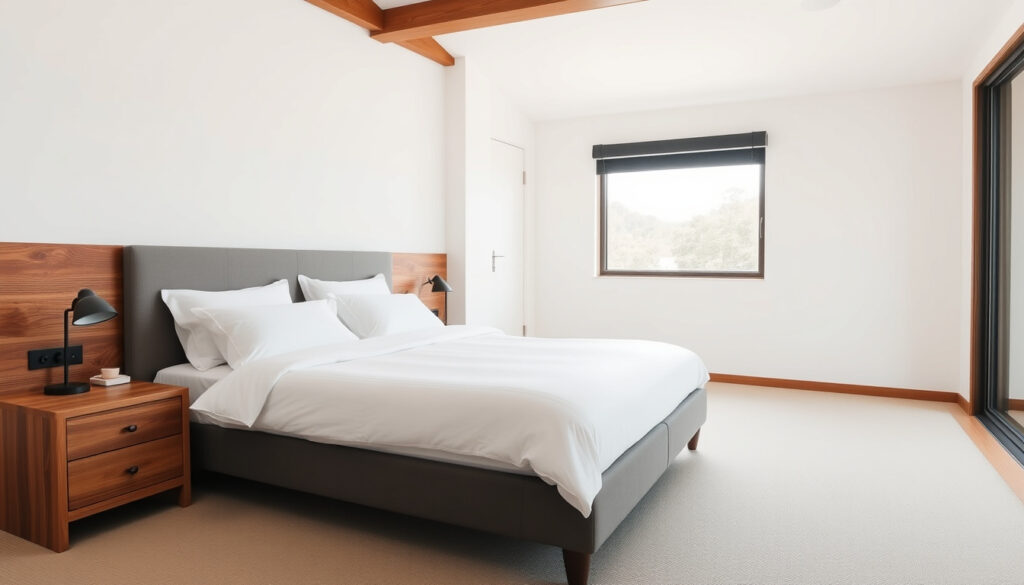
King Size Mattress NZ: Dimensions, Prices & Best Brands
New Zealand retailers give slightly different numbers for a king mattress width – but the actual standard is clear. One says 167 cm, another 168 cm, and Australian friends insist their king is different. Here’s what the standards say, what you should expect to pay, and which brands New Zealanders trust most – backed by verified local data.
Standard king dimensions (NZ): 1685 mm × 2030 mm ·
Average price range: NZD $800 – $3,500 ·
Top-rated brand (NZ surveys): Sealy ·
Most common firmness: Medium-firm
Quick snapshot
- King mattress dimensions in NZ are 1685 mm × 2030 mm (Sealy NZ, leading NZ mattress manufacturer)
- Super king measures 2030 mm × 2030 mm (Sealy NZ) (Sealy NZ, leading NZ mattress manufacturer)
- Sealy and Sleepyhead are the dominant NZ brands (MoneyHub NZ, independent consumer comparison site)
- Exact price ranges for specific models vary by retailer and promotions
- Which mattress is ‘best’ for scoliosis depends on individual spinal curve severity
- Long-term durability of newer bed-in-a-box brands has limited NZ-specific data
- Sealy NZ size guide last updated June 2026 (Sealy NZ) (Consumer NZ, independent consumer advocacy organisation)
- MoneyHub mattress guide last updated June 2026 (MoneyHub NZ) (Consumer NZ, independent consumer advocacy organisation)
- Consumer NZ bed-buying guide last updated June 2026 (Consumer NZ, independent consumer advocacy organisation)
- Expect more bed-in-a-box options with adjustable firmness (e.g., Ecosa)
- NZ-specific hybrid models gaining traction
- Retailers likely to focus on bundled bed + base deals
The numbers to know before you buy.
| Fact | Value |
|---|---|
| NZ king mattress width | 1685 mm |
| NZ king mattress length | 2030 mm |
| Most popular mattress type in NZ | Innerspring with pillow top |
| Average replacement frequency | Every 8–10 years |
| Estimated annual mattress sales in NZ | Over 300,000 units |
What size is a king mattress in NZ?
Standard king dimensions
The New Zealand king mattress is officially 1685 mm wide by 2030 mm long, according to Sealy NZ (the country’s largest mattress manufacturer). That’s roughly 66 × 80 inches. Other retailers round the numbers slightly: Sleepyhead (NZ-made mattress specialist) lists 167 × 203 cm, while Treasure Box (NZ furniture and bedding retailer) gives 168 × 203 cm. The small variations are rounding differences – all refer to the same standard size.
Five measurements, one takeaway: however it’s expressed, the NZ king is narrower than its US counterpart (which is 76″ wide) but longer than the UK variant. Always confirm against the NZ standard, especially if importing.
Super king vs king
If you need more width, the super king measures 2030 × 2030 mm – a square. Sealy NZ includes it as a standard size. Some retailers like Lifestyle Furniture (NZ bedding retailer) list it as 183 × 203 cm, which appears to be a confusion with the Australian super king. For true NZ standard, stick with the Sealy specification.
Super king beds require wide doorways and hallways. Measure your route before buying – a mattress that won’t fit around a corner is a costly frustration.
Measuring your bedroom for a king bed
- Allow at least 600 mm clearance on each side for walking and making the bed.
- Check door widths – standard NZ doors are 820 mm, but some older homes have narrower frames.
- Consider the bed base: a king mattress plus frame adds 50–100 mm to overall dimensions.
What this means: a king mattress needs a room at least 3 metres wide to feel comfortable. If your bedroom is smaller, a queen (153 × 203 cm) may be more practical.
How much should you pay for a king size mattress?
Price ranges by type
Three price bands, one choice: balance comfort with longevity
| Type | Budget (NZD) | Mid-range (NZD) | Premium (NZD) |
|---|---|---|---|
| Memory foam | $800 – $1,200 | $1,500 – $2,200 | $2,500 – $3,500+ |
| Innerspring | $900 – $1,400 | $1,600 – $2,500 | $2,800 – $4,000+ |
| Hybrid | $1,200 – $1,800 | $2,000 – $3,000 | $3,200 – $5,000+ |
Prices are based on Bedpost (NZ bedding retailer) listings and MoneyHub NZ’s independent survey. Promotions can slash 30–40% during sales events.
Where to find king bed and mattress deals NZ
Major retailers include Harvey Norman, Bedpost, Freedom Furniture, and online specialists like Ecosa and Sleepyhead. Consumer NZ advises comparing the mattress and bed base together, as bundled packages often offer the best value (Consumer NZ).
Bed base and mattress combo costs
A king mattress alone is half the expense. Quality bed bases (slatted, upholstered, or adjustable) add $400–$1,200. Factor in $100–$200 for delivery and old mattress removal.
Cheap combo deals may pair a decent mattress with an undersized or low-quality base. A mattress on a poor base voids warranty and decreases lifespan.
The implication: mid-range models offer the safest balance of cost and quality.
What is the best mattress to buy in NZ?
Top-rated brands: Sealy, Sleepyhead, Ecosa
- Sealy – market leader, widely available, used in 5-star hotels. Their Posturepedic range is the most cited by NZ retailers.
- Sleepyhead – NZ-made, offers foam, innerspring, and hybrid options. Strong customer satisfaction in local surveys.
- Ecosa – bed-in-a-box with adjustable firmness (soft/medium/firm). Good for couples with different preferences.
MoneyHub NZ also lists King Koil and SleepMaker as notable alternatives.
Here is how the top brands compare.
| Brand | Type | Firmness options | Price range (king) | Warranty |
|---|---|---|---|---|
| Sealy Posturepedic | Innerspring / Hybrid | Plush, Medium, Firm | $2,000 – $4,000 | 10 years |
| Sleepyhead | Innerspring / Hybrid / Foam | Soft, Medium, Firm | $1,500 – $3,500 | 10 years |
| Ecosa | Memory foam (adjustable) | Adjustable (3 settings) | $1,200 – $1,800 | 15 years |
What the comparison shows: Sealy dominates the premium hotel segment, Sleepyhead offers the widest range, and Ecosa provides value with lifetime warranty support.
Mattresses used in 5 star hotels
“Many 5 star hotels in NZ use Sealy or custom-made Dunlopillo models,” according to industry insights from MoneyHub NZ. Retail versions are available but may differ slightly from hospitality stock in terms of edge support and fill layers.
The trade-off: hotel mattresses feel plush due to pillow tops, but some consumers report they sag faster than firmer retail models. If you want that hotel feel, look for a pillow-top hybrid with reinforced edges.
Mattresses to avoid (common complaints)
- Budget foam-in-a-box models with reported sagging within 2 years
- Mattresses with poor edge support – test by sitting on the edge before buying
- Brands with limited NZ returns/refund policies (online-only retailers without local warehouses)
Consumer NZ recommends reading return policies carefully – some online brands require you to repackage and ship back at your own cost.
For most NZ households, a medium-firm Sealy Posturepedic or Sleepyhead hybrid offers the best balance of local support, warranty coverage, and resale value.
What’s the best firmness for a king mattress?
Firmness levels explained
- Soft: sinks in 1–2 inches; best for side sleepers who need shoulder and hip pressure relief.
- Medium: sinks in 0.5–1 inch; versatile for couples with different sleep positions.
- Firm: minimal sink; recommended for back pain, scoliosis, and stomach sleepers.
Best firmness for scoliosis and back pain
According to Sleepcenter Beds (NZ specialist retailer), medium to firm support helps maintain spinal alignment. People with scoliosis should prioritise a mattress that contours without sagging – memory foam or hybrid with zoned support is often recommended.
Here is how firmness maps to sleep position.
| Sleep position | Recommended firmness | Reason |
|---|---|---|
| Side sleeper | Soft to medium | Relieves pressure on hips/shoulders |
| Back sleeper | Medium to firm | Supports lumbar curve |
| Stomach sleeper | Firm | Prevents hips from sinking |
| Couples (mixed) | Medium or adjustable | Balance comfort and motion isolation |
The pattern: medium-firm (around 6–7 on a 10-point scale) suits most NZ sleepers. Side sleepers can go softer; stomach sleepers need firmer.
Which mattress is used in 5 star hotels?
Common hotel mattress brands in NZ
Sealy dominates the hospitality sector. MoneyHub NZ notes that many luxury hotels use Sealy Posturepedic or custom Dunlopillo models with pillow-top construction.
Why hotel mattresses feel different
Hotel beds often combine a medium-plush mattress with a thick pillow top and a high-quality base. The feel is luxurious but less durable – hospitality models are replaced every 3–5 years, while residential mattresses last 8–10.
Can you buy the same mattress for home?
Yes, but be aware: retail versions of hotel brands may have different foam densities and edge support. Ask the retailer whether the model is identical to hospitality stock. Some brands, like Sealy, offer a “hotel collection” specifically for home use.
“The NZ king mattress you buy off the floor isn’t always the same as the one in a hotel room,” warns Sleepyhead’s technical team (NZ mattress manufacturer). “Check the specification sheet – look for coil count, foam density, and edge reinforcement.”
The catch: hotel-style mattresses trade long-term durability for plush comfort, so expect replacement sooner.
Confirmed facts vs unclear areas
Confirmed facts
- Standard king dimensions in NZ are 1685 × 2030 mm (Sealy NZ)
- Super king is 2030 × 2030 mm (Sealy NZ)
- Sealy and Sleepyhead are major NZ brands (MoneyHub NZ)
- Hotel mattresses are often custom-manufactured and not identical to retail (MoneyHub NZ)
What’s unclear
- Exact price ranges for specific models vary by retailer and promotions
- Which mattress is ‘best’ for scoliosis depends on individual spinal curve severity
- Long-term durability of newer bed-in-a-box brands has limited NZ-specific data
Pros and cons of buying a king mattress
Upsides
- Generous sleeping space for couples – 1685 mm width gives each person about 840 mm
- Wide choice of brands and types available in NZ
- Better resale value compared to queen
Downsides
- Requires large bedroom – at least 3 m × 3.5 m
- Heavier and harder to move than smaller sizes
- Higher upfront cost and more expensive bedding/linen
The takeaway: king beds suit spacious homes and couples who value room; downsides are primarily space and cost.
Steps to choose the perfect king mattress
- Measure your room – include doorways, hallways, and staircase turns.
- Decide your budget – use the price bands above to filter options.
- Choose your type – innerspring if you like bounce, memory foam for pressure relief, hybrid for balance.
- Pick a firmness – based on your sleep position and any back issues.
- Test in-store – spend 10 minutes lying in your usual sleep position.
- Check the warranty – 10 years is standard; look for no-sag clauses.
- Compare bundled deals – mattress + base often cheaper than separate purchases.
Consumer NZ says the best approach is to take your time – a mattress is a 10-year investment (Consumer NZ bed-buying guide).
Expert perspectives on king mattresses in NZ
“In New Zealand, a king mattress is commonly listed as 1685 x 2030 mm by Sealy NZ, while other NZ retailers list it as 168 x 203 cm or 167 x 203 cm, indicating small measurement/rounding differences across sources.”Sealy NZ (official size guide)
“Sealy Posturepedic and Sleepyhead are NZ market leaders. For 2025, we recommend medium-firm hybrid models as the best value for most couples.”MoneyHub NZ (independent consumer comparison)
“Firmness is not one-size-fits-all. Side sleepers need softer surfaces; back sleepers benefit from medium support. Always test before you buy.”Sleepyhead technical team (NZ mattress manufacturer)
For New Zealand buyers, the king mattress decision comes down to three factors: room size, sleep position, and budget. The clear recommendation: a medium-firm hybrid from Sealy or Sleepyhead, paired with a quality base, offers the best long-term comfort and warranty protection. For side sleepers or couples with different preferences, an adjustable-firmness model like Ecosa is a strong alternative. The trade-off is clear: spend under $1,200 and you risk sagging within five years; invest $2,000–$3,000 and you get a mattress that will serve you for a decade. For Kiwis who value their sleep, the maths is simple.
Related reading: Small Dining Table NZ: Buying Guide for 2025 · Products Offered by The Warehouse Gisborne – Complete Guide
8hours.co.nz, beds4u.co.nz, freedomfurniture.co.nz, ecosa.co.nz
Frequently asked questions
Do king size beds fit in most NZ bedrooms?
Not in smaller homes. A king bed needs a room at least 3 m × 3.5 m with 600 mm clearance on each side. Measure your room and entry path before buying.
What is the best mattress topper for a king size bed?
A 5–10 cm memory foam or latex topper can adjust firmness. For NZ conditions, look for breathable, washable covers – humidity can trap heat in dense foam.
Are king size mattresses the same in Australia and NZ?
No. Australian king is 183 × 203 cm – wider than the NZ king (1685 × 203 cm). If you buy from an Australian online store, confirm the dimensions are NZ-standard.
How long does a king size mattress typically last?
Most NZ manufacturers recommend replacement every 8–10 years. Premium models with high-density foam or pocket springs can last 12 years with proper support.
Can I use a king base with a super king mattress?
No – the super king is 345 mm wider. Always match the base to the mattress size. Using a king base with a super king mattress voids warranties and compromises support.
What is the return policy for king mattresses bought online in NZ?
Most online retailers offer 30–100 night trials. However, returning a king mattress can be costly – some charge a pickup fee (NZD $50–$150) and require original packaging.
More related posts
 Products Offered by The Warehouse Gisborne – Complete Guide
 Small Dining Table NZ: Buying Guide for 2025
 When Is the Next OCR Announcement? 2026 Schedule & Forecast
 Full Moon July 2025: Buck Moon Date & Spiritual Meaning
 Cast of Wicked: For Good – Full List of Actors and Roles
 Wordle Solver 5 Letter: Best Tools & Tips
 Is It a Public Holiday Today – Quick Country Checker
 Aggy K. Adams: Biography, Nationality, and Role in The Witcher
