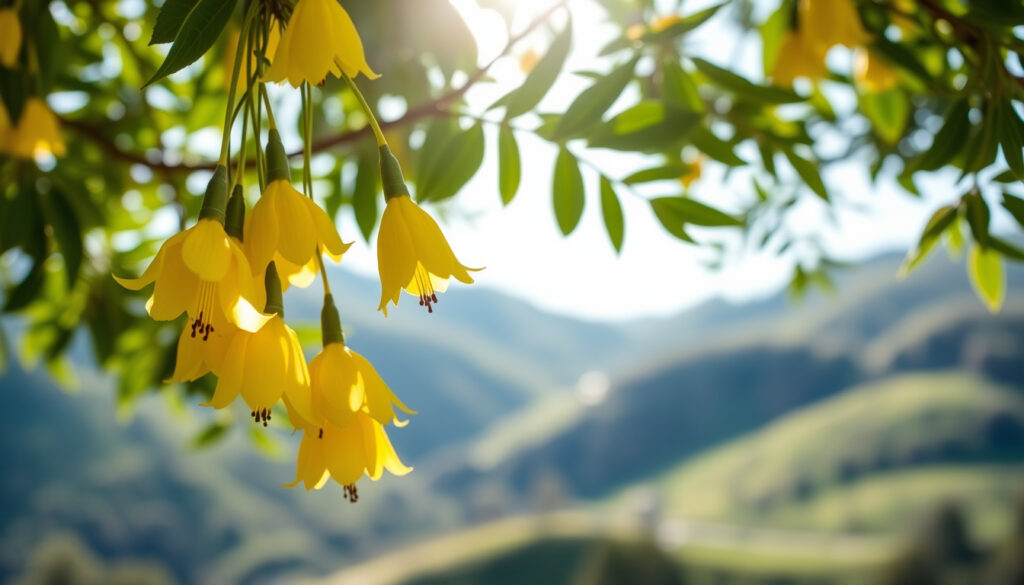
New Zealand National Flower: The Kōwhai – Meaning & Symbolism
Every spring, New Zealanders watch their gardens and roadsides turn gold as the kōwhai trees erupt in bloom — a display so iconic that most Kiwis call it their national flower. But here’s the surprise: New Zealand has never legally designated a national flower. The kōwhai (Sophora tetraptera) holds that title not by law, but by something more enduring — cultural consensus.
National flower: Kōwhai (Sophora tetraptera) ·
Scientific name: Sophora tetraptera ·
Bloom time: Early spring (August–November) ·
Native status: Endemic to New Zealand ·
Symbolism: New beginnings, spring, vitality
Quick snapshot
- Kōwhai is widely recognized as New Zealand’s national flower (Department of Conservation)
- It is endemic to New Zealand (New Zealand Flora)
- No official legislation designates it as the national flower (Te Ara: The Encyclopedia of New Zealand)
- Whether official government designation will ever occur (Te Ara)
- Exact number of kōwhai species — commonly cited as eight (New Zealand Flora)
- No definitive legal process to formalize a national flower (Te Ara)
- Whether pōhutukawa is also considered an unofficial national symbol (Te Ara)
- Whether the kōwhai’s status varies by region (Department of Conservation)
- Bloom season: early spring (August–November) (Department of Conservation)
- Flowering varies by region and species (Department of Conservation)
- Peak nectar period for tūī and bellbirds (Department of Conservation)
- Conservation of kōwhai habitats remains a priority (Department of Conservation)
- Recognition as a national symbol continues to grow culturally (Department of Conservation)
- No current legislative push for official designation (Te Ara)
Five key facts, one clear picture: the kōwhai sits at the centre of New Zealand’s national identity without a single law backing it up.
| Attribute | Value |
|---|---|
| National flower | Kōwhai (Sophora tetraptera) |
| Scientific name | Sophora tetraptera |
| Bloom season | Early spring (August–November) |
| Native status | Endemic to New Zealand |
| Symbolism | New beginnings, spring, vitality |
What is the national flower of New Zealand?
New Zealand does not have a legally designated national flower — but ask any local and they’ll likely say the kōwhai. The Department of Conservation (New Zealand’s primary conservation authority) states the kōwhai is “widely regarded as New Zealand’s national flower.” Te Ara: The Encyclopedia of New Zealand confirms the same — it lists kōwhai and pōhutukawa as “unofficial national symbols” alongside the silver fern.
What is New Zealand’s native flower?
The kōwhai is a genus of small trees in the legume family Fabaceae, genus Sophora, and is endemic to New Zealand — meaning it grows nowhere else naturally. According to New Zealand Flora (the authoritative botanical database), there are eight recognized species of kōwhai. The most common are Sophora microphylla (small-leaved kōwhai), Sophora tetraptera (large-leaved kōwhai), and Sophora prostrata (prostrate kōwhai).
What is the scientific name of the kōwhai?
The genus Sophora contains all kōwhai species. New Zealand Flora identifies Sophora tetraptera as the large-leaved kōwhai and Sophora microphylla as the small-leaved variety — the two species most often associated with the “national flower” title. The name kōwhai itself comes from te reo Māori and means “yellow,” as recorded in the Te Aka Māori Dictionary.
The implication: cultural consensus has proven more durable than any formal decree.
What is the Māori flower?
In Māori tradition, the kōwhai is considered a taonga (treasure). Its bright yellow flowers carry deep symbolic meaning tied to the seasonal cycle and spiritual beliefs.
What is the significance of the kōwhai in Māori culture?
According to NZHistory (New Zealand’s official history website), the kōwhai appears in traditional Māori narratives and sayings as a symbol of new life and renewal. The tree was used to make tools — its tough wood was shaped into paddles, digging implements, and weaponry. The yellow flowers were also used in traditional medicine, and the nectar provided a sweet treat for children.
How is kōwhai used in traditional Māori medicine?
Māori used preparations from the kōwhai’s bark and leaves to treat bruises, sprains, and skin conditions. The Department of Conservation notes that kōwhai trees are “important nectar sources for native birds, especially tūī and bellbirds,” a relationship Māori observed and valued as part of forest ecology.
“Kōwhai is one of the most widely recognized native trees, symbolizing spring.”
— Te Ara: The Encyclopedia of New Zealand
What this means: The kōwhai’s cultural significance isn’t decorative — it’s functional, medicinal, and deeply tied to Māori identity. The flower’s yellow color, linked to the sun and spring, made it a natural symbol of vitality and continuity.
Which tree is found only in New Zealand?
The kōwhai is one of many trees that grow exclusively in New Zealand — a botanical distinction that strengthens its claim as a national emblem.
What are other endemic trees in New Zealand?
- Kauri (Agathis australis) — massive conifer, iconic to Northland
- Rimu (Dacrydium cupressinum) — dominant native forest tree
- Tōtara (Podocarpus totara) — prized by Māori for carving and construction
- Karaka (Corynocarpus laevigatus) — coastal tree with orange fruit
New Zealand Flora confirms that the entire Sophora genus as found in New Zealand is endemic — no kōwhai species occur naturally anywhere else in the world.
Is the kōwhai also endemic?
Yes. All eight New Zealand kōwhai species are endemic. The New Zealand Flora database lists the genus as native only to New Zealand. That exclusivity underscores why kōwhai, rather than a more widespread bloom, became the natural candidate for national flower status.
New Zealand’s endemic flora gives the country a distinct botanical identity. Kōwhai joins kauri, rimu, and tōtara as species that exist nowhere else — making the “national flower” label feel biologically inevitable, even without legislation.
The pattern: endemism reinforces the claim, but designation remains cultural.
What are the other national symbols of New Zealand?
The kōwhai doesn’t stand alone. New Zealand’s visual identity is built on a handful of native symbols that appear on everything from sports jerseys to government documents.
What is New Zealand’s national bird?
The kiwi — a flightless, nocturnal bird — is New Zealand’s national bird and perhaps its most recognized emblem worldwide. According to Te Ara: The Encyclopedia of New Zealand, the kiwi is “the best-known national symbol” alongside the silver fern.
What is New Zealand’s national tree?
The silver fern (Cyathea dealbata, also called ponga) serves as the national tree. It appears on the uniforms of the All Blacks and other national sports teams, and is used widely in tourism branding. Te Ara lists the silver fern as one of the country’s unofficial national emblems, alongside the kōwhai and the red pōhutukawa.
What is New Zealand’s national animal and bird?
The kiwi covers both roles as national bird and is often treated as a de facto national animal. The koru — a spiral shape based on an unfurling silver fern frond — is another key national symbol, representing new life, growth, and strength in Māori art and modern New Zealand design.
For a broader look at New Zealand’s natural treasures, see our guide to Natural Wonders of the World.
The catch: none of these symbols require a government stamp to be effective.
What does the New Zealand national flower symbolize?
The kōwhai’s meaning goes beyond “pretty yellow flower.” Its symbolism touches on seasonal cycles, ancestry, and national identity.
What is the meaning of the kōwhai flower?
In Māori tradition, the kōwhai flower is associated with spring, new beginnings, and growth. According to NZHistory, it also links to whakapapa — genealogy and ancestral connection — because the tree’s perennial return each spring mirrors the continuity of family lines.
Why is the kōwhai yellow?
The bright yellow colour is a product of carotenoid pigments in the petals. But culturally, the yellow is emblematic of the sun and warmth — a welcome signal at the end of winter. The Department of Conservation notes that the blooms appear in “early spring (August–November),” making them one of the first bursts of colour in the New Zealand landscape after the cooler months.
“Kōwhai is a hardy native tree, often found on forest edges and riverbanks.”
— Department of Conservation, New Zealand
Kōwhai’s symbolism works on two levels: ecologically, it signals the arrival of spring and provides critical nectar for native birds. Culturally, it represents renewal and ancestry for Māori. For New Zealanders today, it bridges indigenous tradition and national identity without needing a formal decree.
The implication: symbolism does not require legislation to be powerful.
What we know vs what’s uncertain
Confirmed facts
- Kōwhai is widely recognized as the national flower of New Zealand (Department of Conservation)
- The kōwhai is endemic to New Zealand (New Zealand Flora)
- No formal legislation has passed to make it official (Te Ara: The Encyclopedia of New Zealand)
- Kōwhai is considered a taonga in Māori tradition (NZHistory)
- The name kōwhai means “yellow” in te reo Māori (Te Aka Māori Dictionary)
What’s unclear
- Whether official government designation will ever occur
- Exact number of distinct kōwhai species — commonly but not definitively cited as eight
- Whether a formal designation would change conservation or cultural status
- Whether pōhutukawa has an equally strong claim as a national symbol (Te Ara)
- Whether the kōwhai’s recognition varies across regions (Department of Conservation)
The pattern is clear: cultural recognition has filled the gap left by legislative silence. For a small country with strong national identity, that may be enough.
blog.russianflora.com, courtship.wiki.ac.nz, en.wikipedia.org, interflora.com.au
Frequently asked questions
How do you care for a kōwhai tree?
Kōwhai trees are hardy and low-maintenance once established. They prefer well-drained soil and full sun. Water regularly during the first year, then reduce once established. Prune lightly after flowering to maintain shape. The Department of Conservation notes kōwhai are naturally resilient, often found on forest edges and riverbanks.
Where can I see kōwhai in bloom?
Kōwhai grows throughout New Zealand — from coastal dunes to inland forests. Popular viewing spots include Christchurch’s Botanic Gardens, Wellington’s Zealandia sanctuary, and many public parks in Auckland. They bloom from August to November, with peak display typically in September.
Is kōwhai poisonous?
Yes — all parts of the kōwhai tree, especially the seeds, contain toxic alkaloids. The Department of Conservation advises that kōwhai seeds are poisonous to humans and should not be ingested. Symptoms can include nausea and vomiting. However, native birds like tūī and bellbirds can safely eat the nectar and flowers.
What animals eat kōwhai seeds?
While the seeds are toxic to humans and most mammals, native birds such as the kākā and kererū are known to consume them. The Department of Conservation highlights that kōwhai is a vital nectar source for tūī and bellbirds, which feed on the flowers and assist with pollination.
What is the national flower of New Zealand tattoo meaning?
Kōwhai tattoo designs often symbolize new beginnings, growth, and connection to New Zealand’s natural heritage. In Māori-inspired tattoo art, the kōwhai flower represents spring and renewal, while the leaves and branches can signify strength and resilience. The koru (spiral) motif, inspired by the silver fern frond, carries similar meanings of new life and continuity.
Can I grow kōwhai in my garden?
Yes — kōwhai trees make excellent garden specimens. They are drought-tolerant once established and attract native birds. The New Zealand Flora notes several species suitable for gardens, including the small-leaved kōwhai (Sophora microphylla) for compact spaces and the larger Sophora tetraptera for open areas. Plant in spring and avoid overwatering.
How long do kōwhai trees live?
Kōwhai trees are relatively long-lived. Under ideal conditions, they can survive 50 to 100 years or more. The Department of Conservation describes kōwhai as a “hardy native tree,” and many specimens in public parks and reserves are known to be several decades old, flowering reliably each spring.
For more on New Zealand’s national days and traditions, read our guide on When is Anzac Day 2025.
The kōwhai’s position as New Zealand’s national flower is a study in how cultural consensus can be more powerful than legislation. For New Zealanders, the golden spring blooms need no government stamp — they already carry the weight of Māori tradition, ecological uniqueness, and everyday recognition. For visitors, the message is simple: if you see a tree covered in bright yellow flowers between August and November, you’re looking at the country’s unofficial, undeniable national flower.
More related posts
 British Royal Family News: Latest Updates Today
 Social Media Ban NZ – Under 16 Rules and Timeline
 Hot Pools New Brighton – Hours Prices Location Guide
 Grow a Garden Discord Server – Step-by-Step Growth Guide
 TradeMe Book a Courier – Step-by-Step Guide to 2025 Rates
 Meghan and Harry News 2025: Current Status, Rumors and Facts
 Find a Word with These Letters: Free Word Finder Tools & Tips
 Spark Share Price NZ (SPK.NZ): Live Quote & Forecast
